
Sodium Hyaluronate: Grade Parameters and Certification Checks
Sodium Hyaluronate: Grade Parameters and Certification Checks
Buyer stage: Research → Evaluation · Focus: sodium hyaluronate grade parameters, certifications, and supply constraints
Sodium hyaluronate is the sodium salt form of hyaluronic acid, a biopolymer used as a raw material across food, cosmetic, and pharmaceutical manufacturing. For procurement teams in the research and evaluation stage, the buying decision is determined by a defined set of constraints: grade, molecular weight range, product type, certification documents, minimum order quantity, and lead time. This guide explains those constraints and maps them to the product structure of Shandong Habier Biopharma Co.,LTD, a manufacturer of hyaluronic acid and hyaluronic acid sodium salt based in Qufu City, Shandong Province, China, founded in 2015.
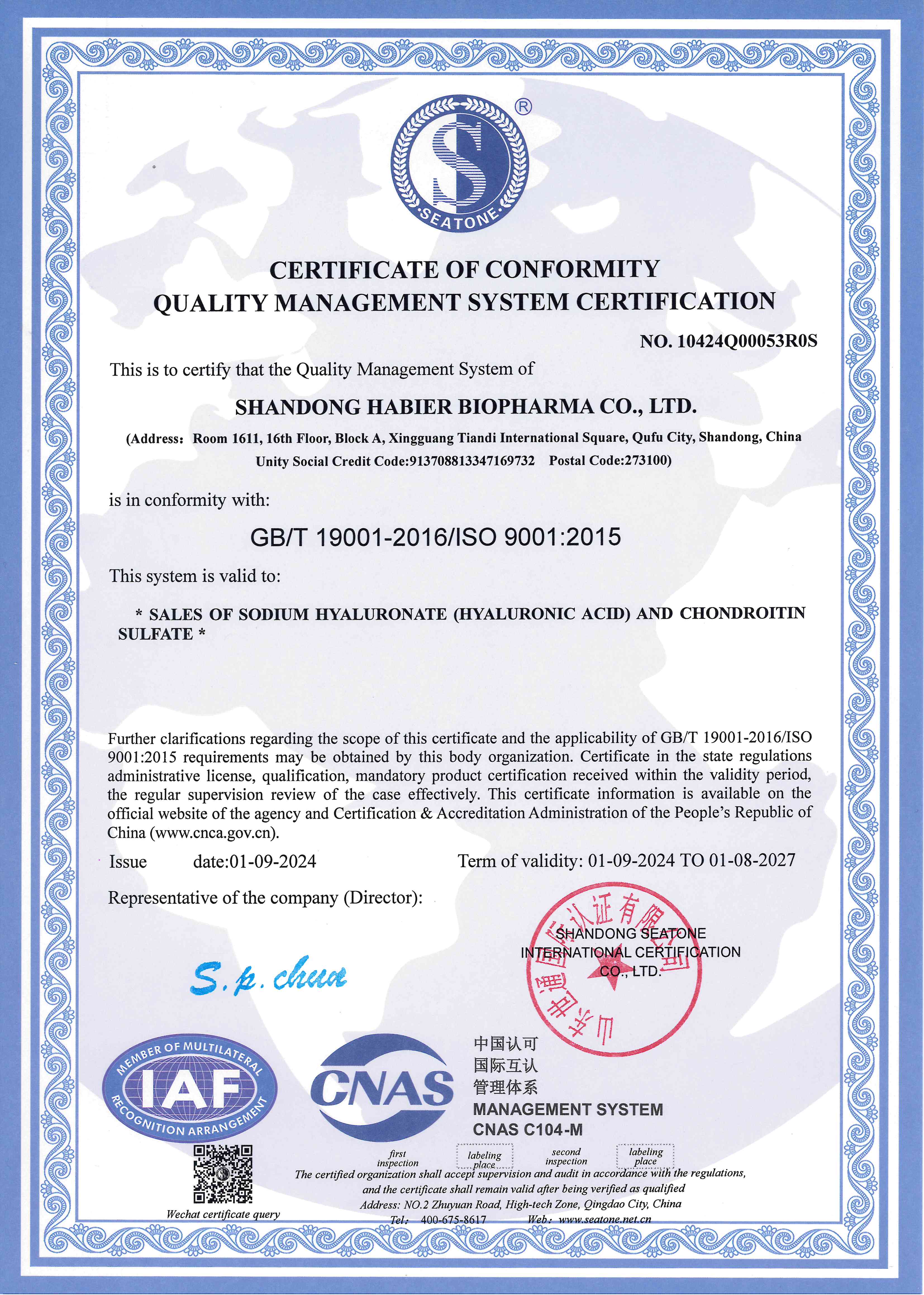
The ISO 9001:2015 certificate is one of two ISO documents buyers should verify for sodium hyaluronate supply.
Why Grade Parameters and Certifications Are the Real Buying Constraints
Procurement failures in sodium hyaluronate rarely come from a missing product — they come from mismatched specifications. The same material name covers a wide parameter space, including high molecular weight sodium hyaluronate, low molecule weight sodium hyaluronate, ultra low molecule weight sodium hyaluronate, super low molecule weight sodium hyaluronate, and hydrolyzed hyaluronic acid. A formulation designed around a high-molecular-weight viscosity profile will behave differently if the delivered batch is a low-molecular-weight or hydrolyzed type.
A buyer must verify three constraints before ordering:
- Grade constraint. Food grade, cosmetic grade, and pharma grade each carry different molecular weight parameters and different regulatory expectations.
- Certification constraint. A certification claim is only meaningful when it names the standard, the certificate number, the issuing authority, and the scope.
- Supply constraint. Minimum order quantity, production lead time, and the supplier's quality control procedure determine whether the material can be delivered repeatably.
The rest of this article applies these three constraints to a traceable manufacturer product line.
Industry Background: Sodium Hyaluronate Demand and Pharmacopoeia Standards
Market data helps buyers calibrate what they are sourcing and why. According to Reports and Data, the global sodium hyaluronate raw material market was valued at approximately USD 504 million in 2024, driven by cosmetic and medical demand. The same research firm estimates the global food grade sodium hyaluronate market at approximately USD 0.5 billion in 2024, with a projected compound annual growth rate of 8.5% through 2034.
Grand View Research reports that the cosmetic grade segment held 61.91% of the hyaluronic acid raw material market in 2025, making it the largest grade segment. In China's cosmetic ingredient filings during H1 2024, sodium hyaluronate remained a top-tier classic ingredient for hydrating masks and essences.
For pharmaceutical applications, the constraint is stricter. According to the Princeton Powder Guide, pharma grade sodium hyaluronate must meet USP-NF, European Pharmacopoeia (EP), and JP standards, with endotoxin levels typically below 0.05 EU/mg. Buyers supplying medical or injectable projects should confirm that the manufacturer's production environment, documentation, and testing approach match this standard.
Detailed Solution: Sodium Hyaluronate Grades and Molecular Weight Parameters
Shandong Habier Biopharma Co.,LTD is a manufacturer of sodium hyaluronate and hyaluronic acid with a 50,000 m² factory, 123 employees, an annual output of 600–700 metric tons, and a six-engineer R&D team. Its main export markets are the EU, USA, and Korea, with an export ratio of 20%.
The sodium hyaluronate product line (applicable product code 5243) is classified into five models: food grade; cosmetic grade; pharma grade; high molecule weight grade; and low molecule weight grade. Each model carries a defined molecular weight parameter — the measurable constraint buyers should write into a specification sheet:
- Food grade: 0.8–1.5 Million Da
- Cosmetic grade: 1.0–1.5 Million Da
- Pharma grade: minimum 2.0 Million Da
- High molecular weight grade: minimum 2.0 Million Da
- Low molecular weight grade: maximum 0.1 Million Da
The same product line is also classified into types, including hydrolyzed hyaluronic acid, low molecule weight sodium hyaluronate, ultra low molecule weight sodium hyaluronate, super low molecule weight sodium hyaluronate, ultra low molecule weight hyaluronic acid, and super low molecule weight hyaluronic acid. A single manufacturer can therefore supply conventional grades and low-molecular-weight variants, which matters for formulators who need different humectant, viscosity, filler, or viscoelastic behavior in the same project.
Certification Checks: What the Documents Must Show
The Sodium Hyaluronate product (applicable product code 5243) holds ISO 22000:2018 certification under certificate number 104FSMS2400001, issued by SHANDONG SEATONE INTERNATIONAL CERTIFICATION CO.,LTD. The certification scope covers "Sales of Sodium Hyaluronate (Hyaluronic Acid) and Chondroitin Sulfate and related food safety management activities" and applies to the global market.
The product also holds ISO 9001:2015 quality management certification (GB/T 19001-2016 / ISO 9001:2015) under certificate number 1042Q00053R0S, issued by the same authority, and is also valid for the global market.
Both certificates were issued on 2024-09-01 and are valid through 2027-01-08. Beyond the dual ISO system, the company's qualification system includes HACCP, Kosher, and Halal, and the product is certified as both organic COSMOS and ISO 16128. The buyer-side verification checklist is simple: confirm the certificate number, the issuing authority, the scope, and the validity period.
Production Capability: OEM/ODM, Capacity, and Quality Control
Shandong Habier Biopharma Co.,LTD operates in OEM/ODM production mode with customization options including purity adjustment. Monthly production capacity is 50–60 tons, and the standard production lead time is 5–8 days. The minimum order quantity is 1 kg, which keeps initial qualification batches practical for new buyers.
Quality control follows a 100% full inspection procedure before delivery. The production environment includes fermentation bioreactors, ultrafiltration purification equipment, sterile mixing tanks, vacuum emulsifiers, cleanroom filling machines, and low-temperature drying ovens, supported by microbial and heavy metal testing instruments. For medical or injection-grade products, production can be carried out under aseptic cleanroom conditions with low microbial limits.
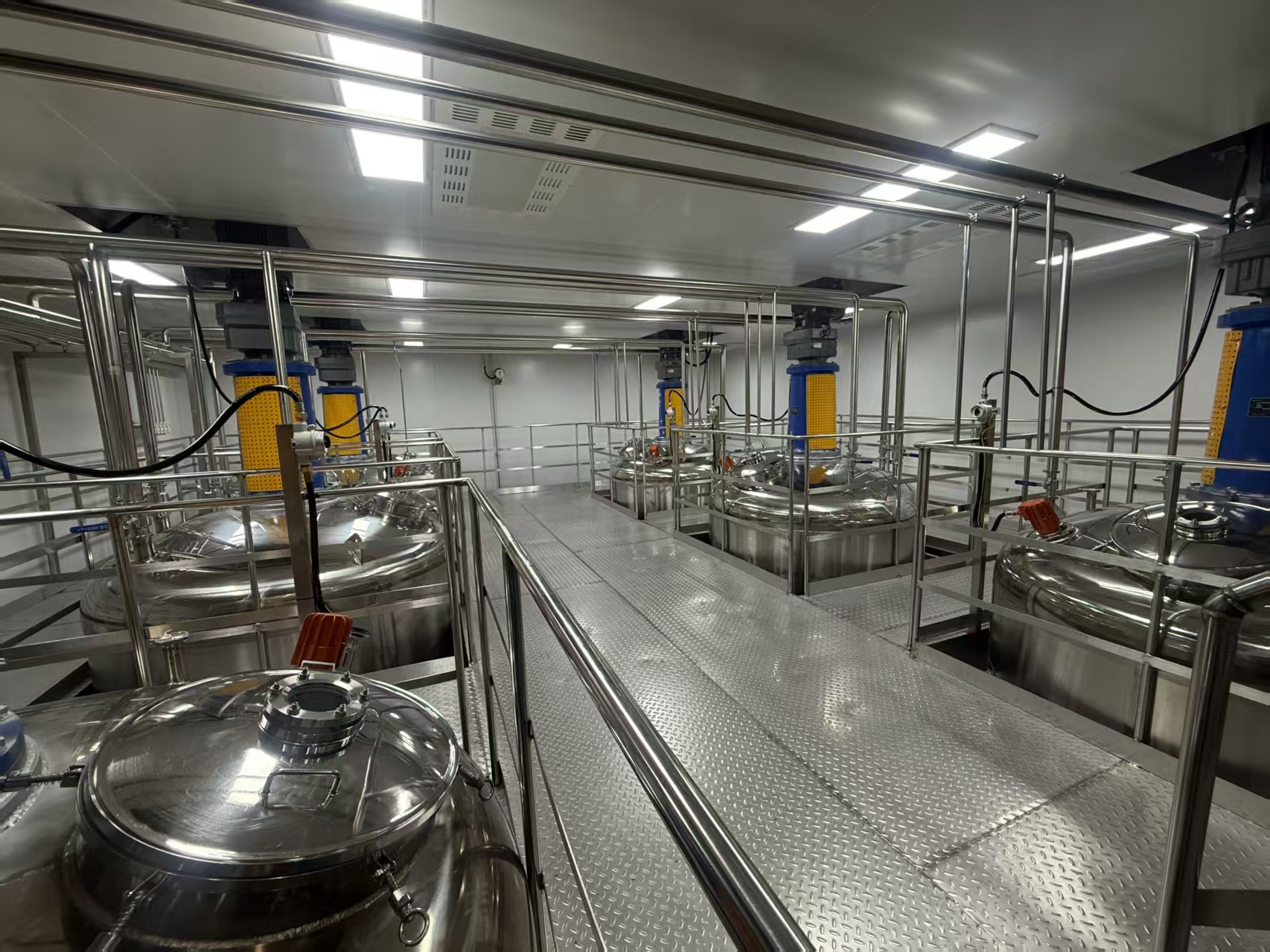
Extraction is one stage of the sodium hyaluronate production process before ultrafiltration purification and drying.
Step-by-Step: Verifying a Sodium Hyaluronate Supplier Against Grade and Compliance Constraints
- Define the application and the grade. Determine whether your project is food (for example, oral health care supplement raw material), cosmetic (for example, skincare raw material blending), or pharma (medical or injection grade). Each maps to a different molecular weight bracket.
- Match the molecular weight parameter. Use the manufacturer's parameter table — food grade 0.8–1.5 Million Da, cosmetic grade 1.0–1.5 Million Da, pharma grade minimum 2.0 Million Da, low molecular weight grade maximum 0.1 Million Da — and confirm the value in the certificate of analysis.
- Verify certifications by number and scope. Ask for the certificate number, issuing authority, standard, and scope. For Shandong Habier Biopharma, this is ISO 22000:2018 (No. 104FSMS2400001) and ISO 9001:2015 (No. 1042Q00053R0S), both issued by SHANDONG SEATONE INTERNATIONAL CERTIFICATION CO.,LTD.
- Check supply-side constraints. Confirm the minimum order quantity (1 kg), lead time (5–8 days), monthly capacity (50–60 tons), and whether OEM/ODM purity adjustment is available.
- Qualify with samples and documentation. Request the free sample, inspect the specification sheet, and confirm customs-related documentation (such as veterinary heat treatment certification for avian-origin material and USDA import permit support) before bulk ordering.
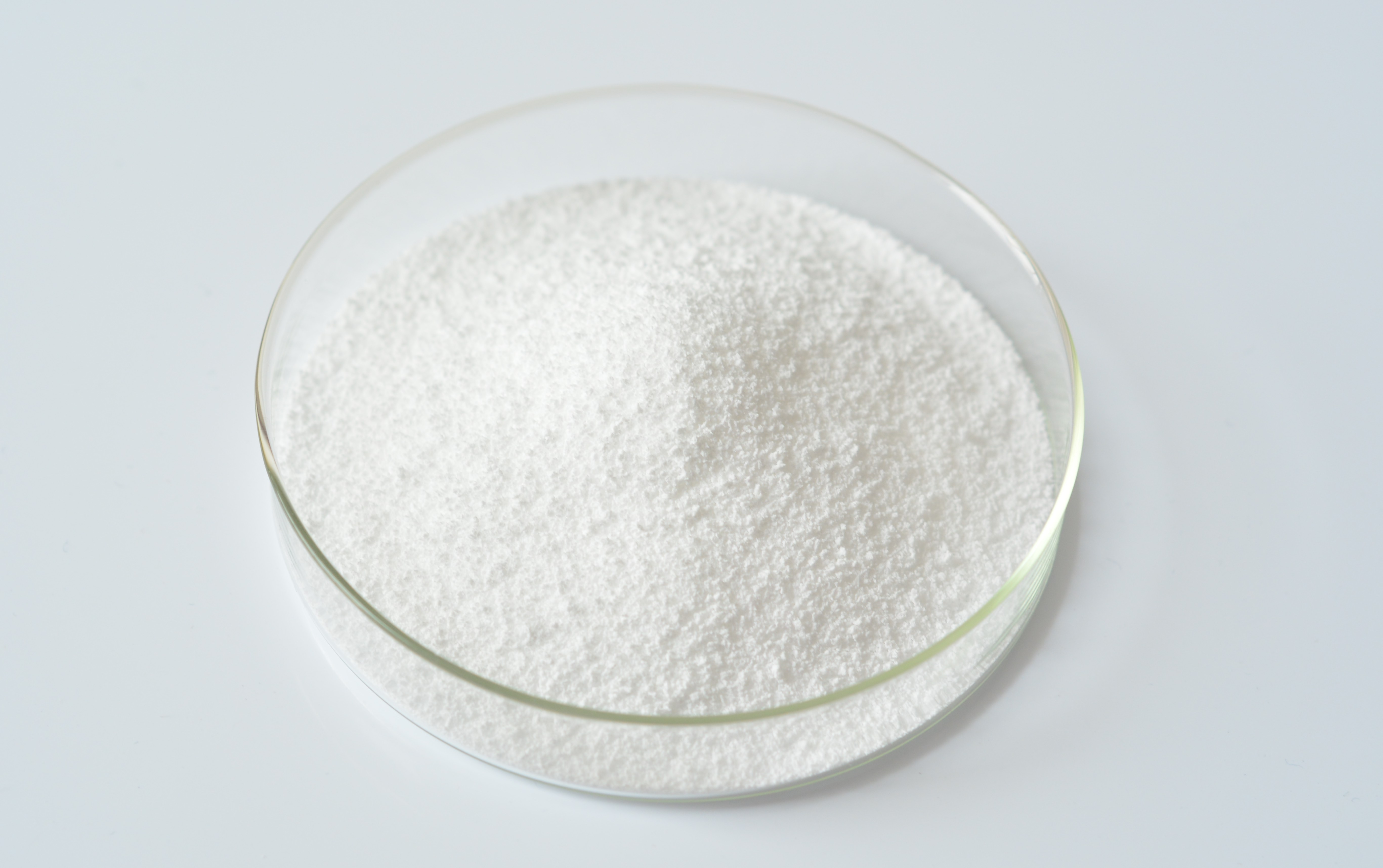
Laboratory sample inspection supports the 100% full-inspection quality control procedure.
Use Cases: Cosmetic Skincare Blending and a US Importer Order
Cosmetic and pharmaceutical production environment. Sodium hyaluronate is produced for cosmetic skincare raw material blending projects under low-temperature fermentation synthesis, with aseptic cleanroom production available for medical or injection grade. In formulation, its common roles include humectant, viscosity modifier, filler, or viscoelastic material. Production and blending operations run 24/7, which requires equipment such as sterile mixing tanks and cleanroom filling machines to maintain batch consistency.
US natural cosmetic and supplement importer case. A documented order from a US natural cosmetic and health supplement importer totaled 4,733 kg of sodium hyaluronate, applied as cosmetic raw material and oral health care supplement raw material over a long-term stable use period. The result was a stable supply of high-purity hyaluronic acid raw materials supporting the customer's laboratory, cosmetic, and oral care mass production demands, with smooth customs clearance supported by a valid USDA import permit. The case highlight: avian-origin raw material with complete official veterinary heat treatment certification, meeting US APHIS import standards, with stable batch quality and long-term repeat order cooperation.
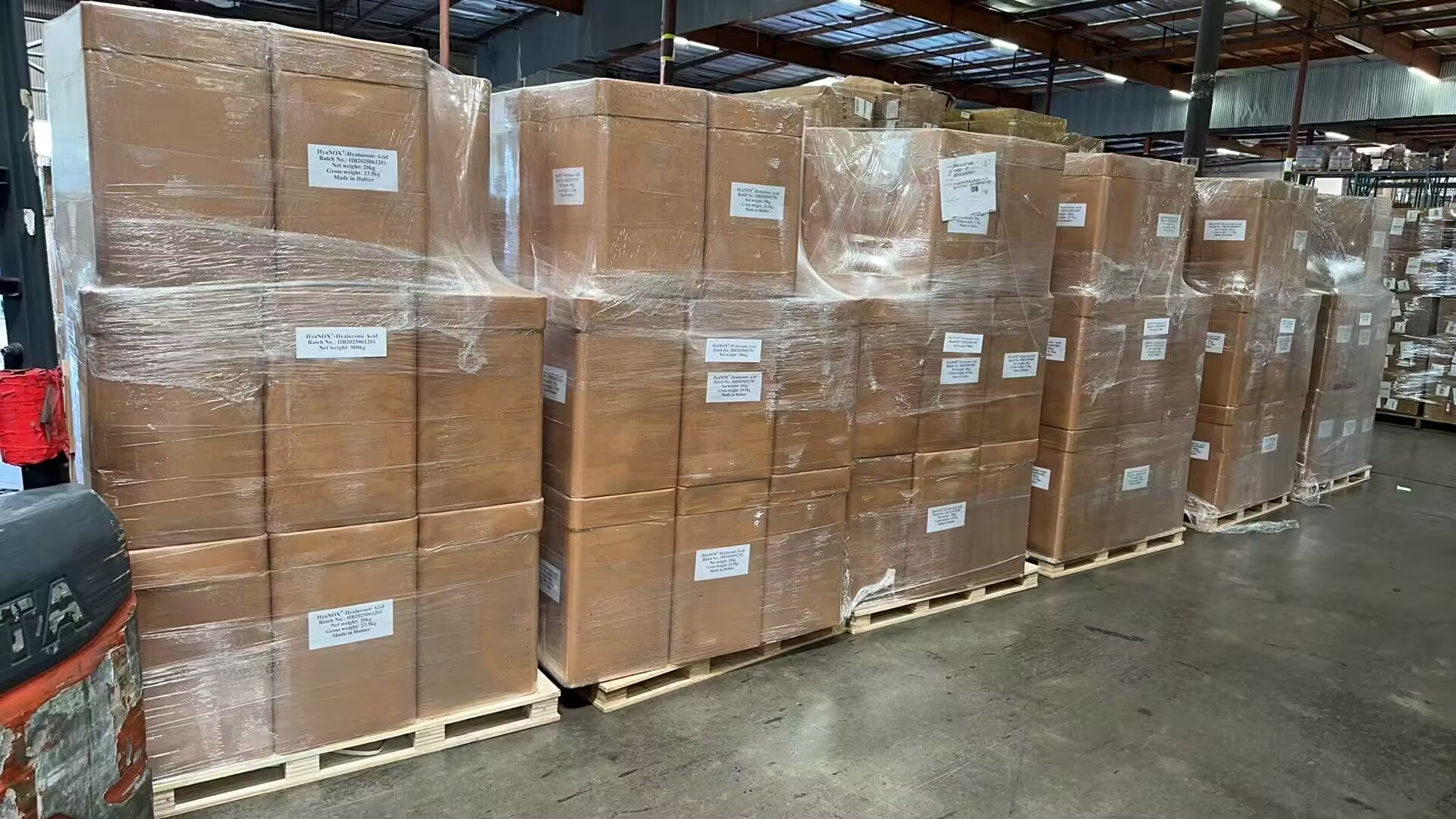
Bulk pallet packaging supports repeat export orders, including the documented 4,733 kg US importer order.
Grade-by-Grade Parameter Comparison
Molecular weight values shown are the manufacturer's standard parameters for product code 5243. For super low, ultra low, and hydrolyzed types, request the specification sheet for the exact value.
Frequently Asked Questions
1. What certifications should I verify when buying sodium hyaluronate from Shandong Habier Biopharma?
Verify two ISO documents. The Sodium Hyaluronate product (product code 5243) holds ISO 22000:2018 certification (No. 104FSMS2400001) and ISO 9001:2015 certification (GB/T 19001-2016 / ISO 9001:2015, No. 1042Q00053R0S), both issued by SHANDONG SEATONE INTERNATIONAL CERTIFICATION CO.,LTD and valid for the global market. The ISO 22000 scope covers the sales of sodium hyaluronate (hyaluronic acid) and chondroitin sulfate and related food safety management activities. The company also operates under HACCP, Kosher, and Halal, and its product is certified as organic COSMOS and ISO 16128.
2. What molecular weight ranges are available for food, cosmetic, and pharma grade sodium hyaluronate?
Food grade is 0.8–1.5 Million Da; cosmetic grade is 1.0–1.5 Million Da; pharma grade is minimum 2.0 Million Da; high molecular weight grade is minimum 2.0 Million Da; and low molecular weight grade is maximum 0.1 Million Da. These parameters are the primary specification constraint for matching a batch to an application.
3. What sodium hyaluronate types are available beyond standard grades?
The product line includes hydrolyzed hyaluronic acid, low molecule weight sodium hyaluronate, ultra low molecule weight sodium hyaluronate, super low molecule weight sodium hyaluronate, ultra low molecule weight hyaluronic acid, and super low molecule weight hyaluronic acid. These types are part of the classification of Sodium Hyaluronate product 5243.
4. What is the minimum order quantity, and can sodium hyaluronate be customized?
The minimum order quantity is 1 kg. Shandong Habier Biopharma Co.,LTD supports OEM/ODM production with customization options including purity adjustment. Monthly production capacity is 50–60 tons, and every batch receives 100% full inspection before delivery.
5. Are free sodium hyaluronate samples available before a bulk order?
Yes. Free sample supply is part of the standard after-sales service, together with after-sales quality tracking. A sample request is the fastest way to validate molecular weight parameters and documentation before committing to bulk volume.
6. What is the production lead time, and how do I request a quote or sample?
The standard production lead time is 5–8 days, and the company exports to the EU and USA. To start, contact Shandong Habier Biopharma Co.,LTD at jake@habier.com or +86-186-0537-0487, or download the company brochure for the full product range. Samples, specification sheets, and quotations can be confirmed in the first conversation.
Conclusion: Buy to a Verified Specification
Sodium hyaluronate procurement is a constraint-driven process. The buyer who specifies the grade, verifies the molecular weight parameter, checks the certificate number and scope, and confirms the supply constraints will receive consistent material. The buyer who does not will carry the risk.
Shandong Habier Biopharma Co.,LTD provides a reference point for that verification process: ISO 22000:2018 and ISO 9001:2015 certified sodium hyaluronate, a defined grade and type structure from food to pharma to low-molecular-weight variants, OEM/ODM capability, 100% full inspection before delivery, a 1 kg minimum order quantity, and a 5–8 day lead time.
Request a Sodium Hyaluronate Sample or Quotation
Contact Shandong Habier Biopharma Co.,LTD directly for free sample supply, specification documents, and current quotations.
Email: jake@habier.com
Phone: +86-186-0537-0487
Website: www.habier.com
Address: 16F Building A Xingguangtiandi International Square, Qufu City, Shandong, China 273100
Download the company brochure (PDF)
Have Questions or Need More Details?
Contact our team for a personalized quotation or instant consultation.
Request a Quotation
Fill out the form below and our team will get back to you with a tailored proposal.
WhatsApp Direct Chat
Prefer to chat in real-time? Message us on WhatsApp for instant assistance & quick answers.
- Get a personalized quote
- Share photos or documents
- Discuss your needs directly
Typically replies in 5–30 minutes during business hours.