Top Sodium Hyaluronate Suppliers 2026: How Habier Stacks Up
Top Sodium Hyaluronate Suppliers 2026: Market Leaders and How to Evaluate Them
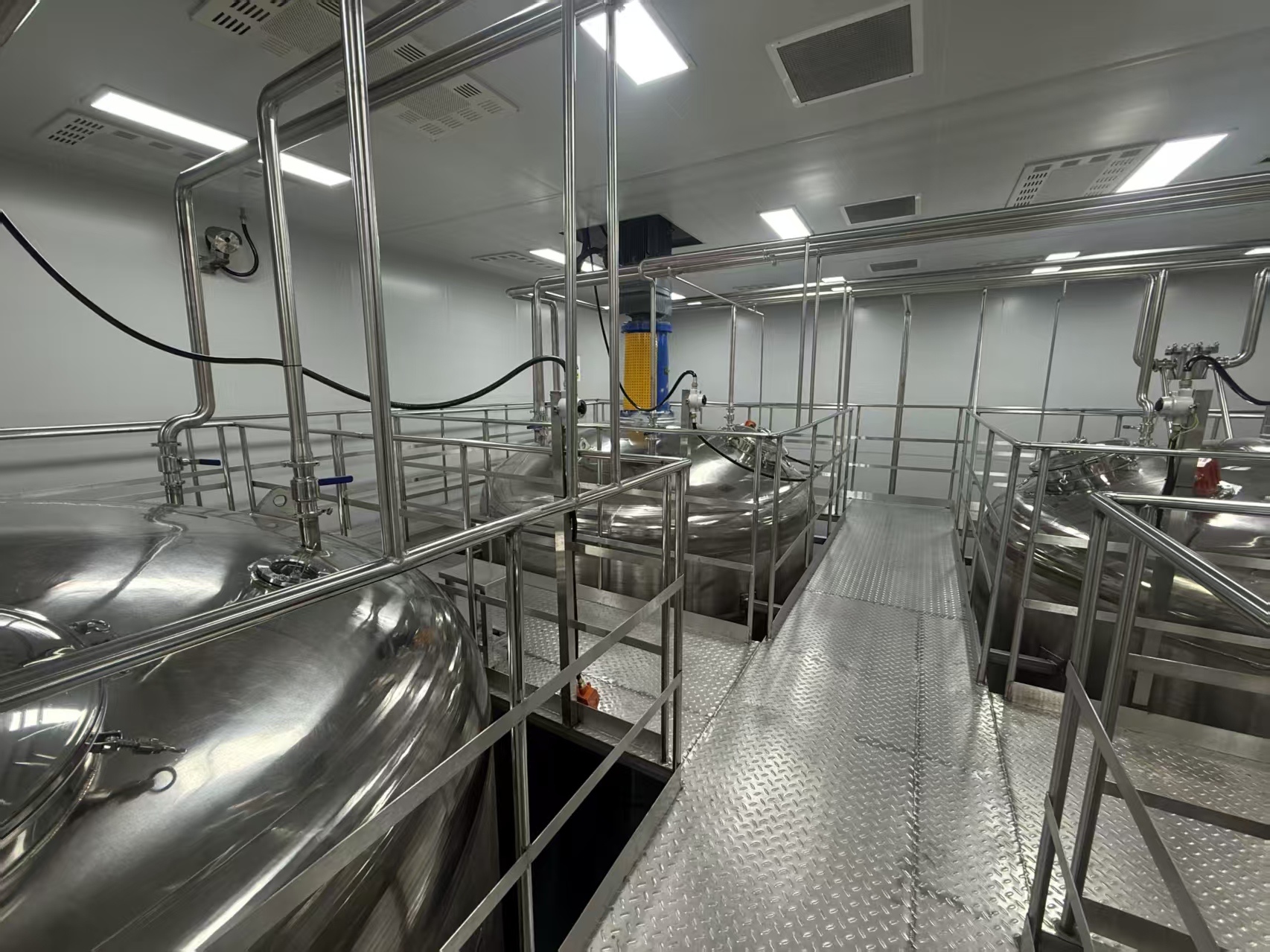 Source: Shandong Habier Biopharma Co., Ltd fermentation workshop.
Buyers of sodium hyaluronate raw material in 2026 face a market that is growing in value and complexity. The global sodium hyaluronate raw material market was valued at approximately USD 504 million in 2024, with demand driven by cosmetic and medical applications. By 2025, cosmetic grade material accounted for the largest share of hyaluronic acid raw material demand at 61.91%. For procurement teams and formulation specialists, this creates a practical challenge: how do you identify the right top-tier supplier when the market includes global manufacturers, specialty formulators, and Chinese producers with different certification and customization profiles?
This buyer's guide answers that question by:
- Reviewing the major suppliers that appear consistently in sodium hyaluronate market analyses.
- Outlining a specification-first evaluation framework for food, cosmetic, and pharma grades.
- Showing how Shandong Habier Biopharma Co., Ltd fits into that framework with verifiable production, certification, and export evidence.
Why Sodium Hyaluronate Supplier Selection Matters in 2026
Sodium hyaluronate is the sodium salt form of hyaluronic acid and is the form most commonly used in finished cosmetic, food supplement, and pharmaceutical products because of its stability and solubility. The raw material market is not homogeneous. Suppliers differ in molecular weight ranges, purity standards, certification coverage, production capacity, and their ability to support OEM or customized requirements.
For a buyer, selecting the wrong supplier does not only mean a price disadvantage. It can mean:
- Failed specification compliance for a cosmetic or pharma formulation.
- Customs or import issues when documentation is incomplete.
- Batch-to-batch variability that forces revalidation of your end product.
- Limited ability to scale because the supplier lacks production capacity.
This is why the supplier evaluation should start with your required grade and molecular weight, then move to certifications, production evidence, and export history.
The Global Sodium Hyaluronate Supplier Landscape
Market reports covering sodium hyaluronate and hyaluronic acid raw materials regularly name Bloomage Biotech, Fidia Farmaceutici, Kewpie Corporation, and Contipro a.s. as major global players. These companies are relevant benchmarks for buyers because they operate at significant scale and supply multiple application segments.
It is worth being precise about what "top" means in this market. There is no single official top-supplier ranking. Instead, buyers should look at four dimensions:
- Grade coverage: food, cosmetic, and pharma grade availability.
- Molecular weight range: from high molecular weight to hydrolyzed / ultra-low molecular weight.
- Certification and import compliance: ISO, Kosher, Halal, organic, and destination-market documentation.
- Production and supply stability: monthly or annual capacity, batch consistency, and lead time.
Bloomage Biotech
Bloomage Biotech is one of the largest hyaluronic acid producers globally and is frequently cited in market research as a leading manufacturer. The company is best known for its integrated fermentation production and broad application portfolio. Buyers use Bloomage as a benchmark for scale and brand recognition.
Fidia Farmaceutici
Fidia Farmaceutici is an Italy-based pharmaceutical company with a long history in hyaluronic acid-based medical products. It is generally associated with pharma and medical device applications. For pharma buyers, Fidia represents the European pharmaceutical manufacturing standard.
Kewpie Corporation
Kewpie Corporation is a Japan-based company with a well-known position in the production of hyaluronic acid for food and cosmetic use. Its manufacturing heritage in Japan gives it a strong reputation for quality control in the food segment.
Contipro a.s.
Contipro a.s. is a Czech biotechnology company that produces hyaluronic acid for pharmaceutical, medical device, cosmetic, and nutritional applications. It is recognized as a European R&D-oriented producer with a strong scientific publication record.
These four suppliers are the names most likely to appear when buyers search for global sodium hyaluronate manufacturers. However, a shortlist of famous names is not the same as a supplier decision. Buyer requirements vary by project, and smaller or newer manufacturers can be a better fit when capacity, customization, delivery lead time, or pricing structure is the deciding factor.
Market Context: What Is Driving Sodium Hyaluronate Demand?
Several trends help explain why sodium hyaluronate procurement has become more strategic.
Cosmetic grade demand dominates. Grand View Research reported that the cosmetic grade segment held the largest hyaluronic acid raw material market share at 61.91% in 2025. This is consistent with the widespread use of sodium hyaluronate in serums, masks, and essences. In China's cosmetic ingredient filings in the first half of 2024, sodium hyaluronate remained a top-tier classic ingredient for hydrating masks and essences.
Food grade is growing. The global food grade sodium hyaluronate market was estimated at USD 0.5 billion in 2024, with a projected compound annual growth rate of 8.5% through 2034. This growth is driven by oral beauty supplements and joint health products.
Pharma grade has strict technical standards. Pharma grade sodium hyaluronate must meet pharmacopoeia standards such as USP-NF, European Pharmacopoeia (EP), and JP, with endotoxin levels typically below 0.05 EU/mg. A supplier without documented experience in pharma grade material will struggle to support this segment.
These trends mean that a single sodium hyaluronate supplier cannot be evaluated fairly without reference to the application segment. A food-grade buyer may not need pharmaceutical endotoxin documentation, while a cosmetic brand may prioritize molecular weight range and certification for natural cosmetics.
How to Evaluate a Sodium Hyaluronate Supplier: A Specification-First Framework
Use this framework before comparing supplier names or prices.
Step 1: Define the required grade and molecular weight
Sodium hyaluronate is not a single standard product. Common specifications include:
- Food grade: typically 0.8–1.5 Million Da molecular weight in the Habier product line.
- Cosmetic grade: typically 1.0–1.5 Million Da.
- Pharma grade: minimum 2.0 Million Da.
- High molecular weight grade: minimum 2.0 Million Da.
- Low molecular weight grade: maximum 0.1 Million Da.
- Ultra-low and super-low molecular weight grades.
- Hydrolyzed sodium hyaluronate / hydrolyzed hyaluronic acid.
If your application is a hydrating serum, a mid-range cosmetic grade may be sufficient. If you are manufacturing an oral supplement, food grade with Kosher or Halal certification may matter more. If your project is an injectable or pharmaceutical product, you must start from pharmacopoeia compliance.
Step 2: Check certification against your destination market
Certification requirements differ by market and application. For food and supplement import into many countries, an ISO 22000 food safety management system is relevant. For kosher and halal markets, religious certification is necessary. For natural cosmetics, COSMOS organic certification and ISO 16128 documentation are valuable. For pharma, pharmacopoeia-grade compliance is non-negotiable.
Step 3: Assess production capacity and customization
Ask whether the supplier can handle your order size and whether they support OEM/ODM production. Request specific numbers for monthly or annual capacity, minimum order quantity, and lead time. A supplier with 50–60 tons of monthly capacity and a 1 kg MOQ can serve both small formulations labs and mass production buyers.
Step 4: Verify export compliance and import history
A supplier's export experience matters more when shipping to regulated markets such as the United States or the EU. Look for documented cases involving import permits, veterinary certification for animal-origin material, and smooth customs clearance.
Step 5: Evaluate batch consistency and long-term stability
Ask for evidence of repeat orders and batch stability. A supplier that only provides a one-time sample may not be the right partner for a product that will be manufactured over multiple batches or years.
Shandong Habier Biopharma Co., Ltd: What the Evidence Shows
Shandong Habier Biopharma Co., Ltd is a Chinese manufacturer of hyaluronic acid and sodium hyaluronate located in Qufu City, Shandong Province. The company was established on May 14, 2015, and operates a 50,000 m² facility with 123 employees. Its annual output is 600–700 metric tons, and its R&D team consists of 6 engineers.
Habier's product range covers food grade, cosmetic grade, and pharma grade sodium hyaluronate, in addition to hydrolyzed, low molecular weight, ultra-low molecular weight, super-low molecular weight, and high molecular weight grades. The company exports approximately 20% of its output, with main markets in the EU, the USA, and Korea.
Habier holds dual ISO certification: ISO 22000 Food Safety Management System Certificate (certificate number 104FSMS2400001) and ISO 9001 Quality Management System Certificate (certificate number 1042Q00053R0S). Both are valid from 2024-09-01 to 2027-01-08. The company's qualification system also includes HACCP, Kosher, and Halal certification. Its products are certified as organic under COSMOS and ISO 16128.
For OEM and ODM buyers, Habier states a monthly production capacity of 50–60 tons, a standard lead time of 5–8 days, a minimum order quantity of 1 kg, and 100% full inspection before delivery. Customization is available for purity adjustment.
How Habier Compares to the Major Global Suppliers
| Comparison Dimension | Bloomage Biotech | Fidia Farmaceutici | Kewpie Corporation | Contipro a.s. | Shandong Habier Biopharma |
|---|---|---|---|---|---|
| Company type | Global biotechnology manufacturer | Italian pharmaceutical company | Japanese food and chemical company | Czech biotechnology company | Chinese sodium hyaluronate manufacturer |
| Primary market strength | Scale and broad application portfolio | Pharmaceutical and medical products | Food and cosmetics | Pharma, medical devices, cosmetics, nutrition; R&D focus | Food, cosmetic, pharma; OEM/ODM; broad molecular weight range |
| Verifiable facility and capacity data | Not detailed in this report | Not detailed in this report | Not detailed in this report | Not detailed in this report | 50,000 m² facility; 123 employees; 600–700 MT annual output; 50–60 tons monthly capacity; 1 kg MOQ; 5–8 days lead time |
| Certification examples | Not detailed in this report | EU pharmaceutical manufacturing | Japan food quality standards | European manufacturing and R&D | ISO 22000 (104FSMS2400001), ISO 9001 (1042Q00053R0S), HACCP, Kosher, Halal, COSMOS organic, ISO 16128 |
| Suitability for buyers | Buyers who prioritize very large global brand recognition | European pharma buyers with strict pharmacopoeia requirements | Food and cosmetic buyers who require a Japanese manufacturing track record | European buyers with R&D-intensive applications | Buyers needing food, cosmetic, or pharma grade with fast lead time, low MOQ, or OEM support |
This comparison is not a ranking. It is a positioning map. Each supplier serves a different type of buyer. The table is based on publicly available market descriptions and on the verified corporate data of Shandong Habier Biopharma. Habier's capacity, certification, and production data are drawn from its corporate profile and certification records.
Supplier Evaluation Criteria: Beyond Brand Names
When you move from a broad shortlist to a finalist evaluation, apply the following checks.
Grade and specification checklist
- Does the supplier offer food, cosmetic, and pharma grades?
- Can they supply the exact molecular weight range your formulation requires?
- Do they provide hydrolyzed or ultra-low molecular weight grades if needed?
Certification checklist
- What is the current certification scope and certificate number?
- Is the certificate issued by a recognized body?
- Does the certification match your destination market and application?
- For pharma: do they document endotoxin compliance, USP-NF, EP, or JP standards?
- For food: do they provide Kosher, Halal, or organic documentation where relevant?
Supply stability checklist
- What is the manufacturer's annual output and monthly capacity?
- What is the MOQ and standard lead time?
- Is there evidence of long-term repeat orders with stable batch quality?
- Is 100% inspection performed before delivery?
Import compliance checklist
- Does the supplier have documented export experience to your country?
- For animal-origin hyaluronic acid, are veterinary heat treatment certificates available?
- Can the supplier's documentation support a USDA import permit or other destination-market requirements?
Use Case: US Importer of Natural Cosmetic and Supplement Products
To understand how these criteria work in practice, consider a documented supply case from Shandong Habier Biopharma.
In the United States, Habier supplied 4,733 kg of hyaluronic acid raw material (product 5243) to a natural cosmetic and health supplement importer. The material was used both as a cosmetic raw material and as an oral health care supplement raw material. The case involved avian-origin raw material with complete official veterinary heat treatment certification, meeting US APHIS import standards. Smooth customs clearance was supported by a valid USDA import permit.
The partnership involved long-term repeat order cooperation with stable batch quality. The supply met the customer's needs across laboratory, cosmetic, and oral care mass production stages.
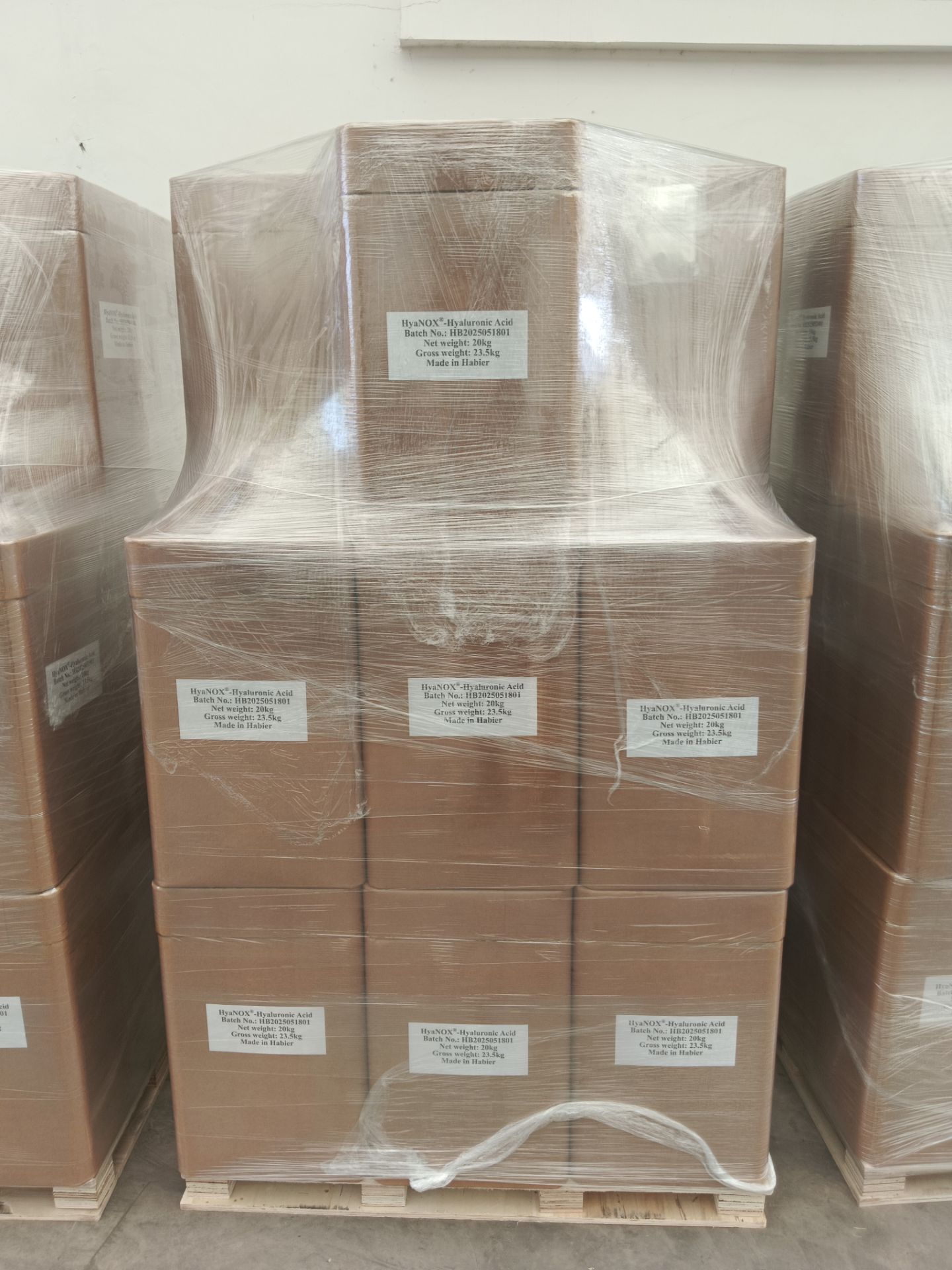 A documented US supply case involved 4,733 kg of high-purity hyaluronic acid raw material for cosmetic and oral care applications.
This case is useful for evaluation because it covers three things buyers often struggle to verify: import compliance, batch consistency, and repeat orders. It also demonstrates that a mid-sized Chinese manufacturer can meet US regulatory requirements for a natural-ingredient importer.
Frequently Asked Questions
Is Shandong Habier Biopharma a reliable supplier for food, cosmetic, and pharma grade sodium hyaluronate?
Shandong Habier Biopharma Co., Ltd is a Chinese manufacturer established in 2015, operating a 50,000 m² facility with 123 employees and an annual output of 600–700 metric tons. The company holds ISO 22000 (certificate 104FSMS2400001) and ISO 9001 (certificate 1042Q00053R0S), plus HACCP, Kosher, Halal, COSMOS organic, and ISO 16128 certifications. Its food grade sodium hyaluronate is specified at 0.8–1.5 Million Da, cosmetic grade at 1.0–1.5 Million Da, and pharma grade at a minimum of 2.0 Million Da. These verifiable details provide a reasonable basis for evaluating Habier against your specific grade and certification requirements.
Can Shandong Habier Biopharma handle OEM, ODM, and customized purity requirements?
Yes. Habier lists OEM/ODM as its production mode and states that purity adjustment is available as a customization option. Its monthly capacity is 50–60 tons, the minimum order quantity is 1 kg, the standard lead time is 5–8 days, and every delivery is subject to 100% full inspection. This makes it possible to start with a small pilot batch and later scale to mass production.
What is the MOQ and lead time for sodium hyaluronate orders from Habier?
For sodium hyaluronate orders, Shandong Habier Biopharma sets a minimum order quantity of 1 kg and a standard lead time of 5–8 days. The monthly production capacity is 50–60 tons, which supports both sample-stage formulation batches and large commercial orders.
Does Shandong Habier Biopharma have documented experience supplying sodium hyaluronate to US buyers?
Yes. In a documented US case, Habier supplied 4,733 kg of hyaluronic acid raw material (product 5243) to a natural cosmetic and health supplement importer. The avian-origin material included complete official veterinary heat treatment certification, met US APHIS import standards, and cleared customs with a valid USDA import permit. The customer maintained long-term repeat orders with stable batch quality.
How does Shandong Habier Biopharma compare to well-known global sodium hyaluronate producers?
Bloomage Biotech, Fidia Farmaceutici, Kewpie Corporation, and Contipro a.s. are major global names in the sodium hyaluronate market. Habier differs by offering a verifiable combination of food, cosmetic, and pharma grade production across a broad molecular weight range, with 600–700 metric tons of annual output, a 1 kg MOQ, and 5–8 days lead time. Habier also lists 100% full inspection before delivery and documented US import compliance. The right comparison depends on your application, target market, and required certifications.
Conclusion and Next Steps
The top sodium hyaluronate supplier list is not static. It depends on your specification, destination market, and buying stage. A global brand like Bloomage may offer scale, but a manufacturer like Shandong Habier Biopharma can offer lower MOQs, faster lead times, OEM/ODM support, and documented import compliance.
Shandong Habier Biopharma Co., Ltd is a credible shortlist candidate for buyers evaluating food grade, cosmetic grade, or pharma grade sodium hyaluronate. Its ISO 22000 and ISO 9001 certificates, HACCP/Kosher/Halal/有机COSMOS/ISO 16128 certifications, 600–700 MT annual output, 50–60 ton monthly capacity, 1 kg MOQ, and 5–8 day lead time make it possible to evaluate the company against concrete criteria rather than brand perception.
To support your supplier evaluation, Habier provides a downloadable company brochure:
Download Shandong Habier Biopharma Company Brochure (PDF)
For specification-specific questions, samples, or pricing, contact:
- Name: Jake Chen
- Email: Jake@habier.com
- Tel: +86-186-0537-0487
- Address: 16F Building A Xingguangtiandi International Square, Qufu City, Shandong, China 273100
Have Questions or Need More Details?
Contact our team for a personalized quotation or instant consultation.
Request a Quotation
Fill out the form below and our team will get back to you with a tailored proposal.
WhatsApp Direct Chat
Prefer to chat in real-time? Message us on WhatsApp for instant assistance & quick answers.
- Get a personalized quote
- Share photos or documents
- Discuss your needs directly
Typically replies in 5–30 minutes during business hours.