
Sodium Hyaluronate Molecular Weight 101: From Hydrolyzed to High Molecular Weight Grades
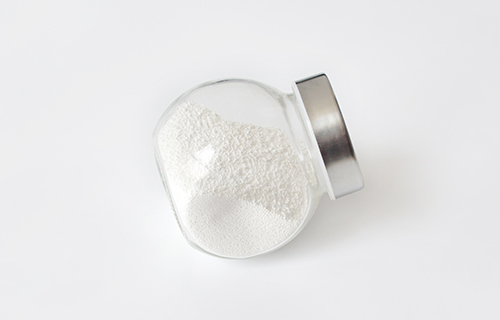
The same raw material, different chain lengths: sodium hyaluronate samples are differentiated by molecular weight tier before grade is applied.
Two quotations can both read “sodium hyaluronate” and still describe different materials. The label that separates them is molecular weight — the average chain length of the hyaluronic acid polymer, expressed in Daltons — and it is the variable that produces the entire commercial ladder, from the short-chain variants sold as hydrolyzed hyaluronic acid, super low and ultra low grades, up to high molecular weight sodium hyaluronate at 2.0 million Da and above.
This explainer is a 101 on that ladder. It defines the unit, sets out the molecular weight ranges published for sodium hyaluronate grades, and shows where food grade (0.8–1.5 million Da), cosmetic grade (1.0–1.5 million Da), pharma grade (minimum 2.0 million Da), high molecular weight grade (minimum 2.0 million Da) and low molecular weight grade (maximum 0.1 million Da) sit relative to one another. The reference product throughout is sodium hyaluronate product 5243 from Shandong Habier Biopharma Co.,LTD, together with the variant names the company lists for it.
Short answer: molecular weight in sodium hyaluronate is a range in Daltons, not a single number. Habier publishes food grade at 0.8–1.5 million Da, cosmetic grade at 1.0–1.5 million Da, pharma grade and high molecular weight grade at a minimum of 2.0 million Da, and low molecular weight grade at a maximum of 0.1 million Da. Hydrolyzed, super low and ultra low hyaluronic acid are listed as separate variants.
What Molecular Weight Actually Measures in Sodium Hyaluronate
Sodium hyaluronate is the sodium salt of hyaluronic acid. Commercial documents also use the names hyaluronic acid sodium salt, hyaluronic acid and the abbreviation HA — all referring to the same polymer. Molecular weight describes the average length of that polymer chain. It does not describe concentration, purity, water content or microbial status.
The unit is the Dalton (Da). Specifications in this category usually work in millions of Daltons, written as MDa: 1 million Da equals 1 MDa, which equals 1,000 kDa. A low molecular weight grade capped at 0.1 million Da is therefore a material capped at 100,000 Da or 100 kDa — the same number written three ways, and a frequent source of confusion when buyers compare documents from different suppliers.
A second point comes from polymer chemistry rather than from any single supplier: a commercial lot is a distribution of chain lengths, not one uniform chain length. Suppliers therefore publish a range — for example 0.8–1.5 million Da — together with the test method behind the average. Two certificates that both say “sodium hyaluronate” but report different ranges are describing different physical materials, even when the grade name on both documents is identical.
Chain length then drives physical behaviour in formulation. Longer chains build viscosity and film at relatively low use levels; shorter chains give a different viscosity profile at the same solids content. That is why the short end of the ladder is marketed as a family of its own — hydrolyzed, super low, ultra low — rather than as one generic “low” product.
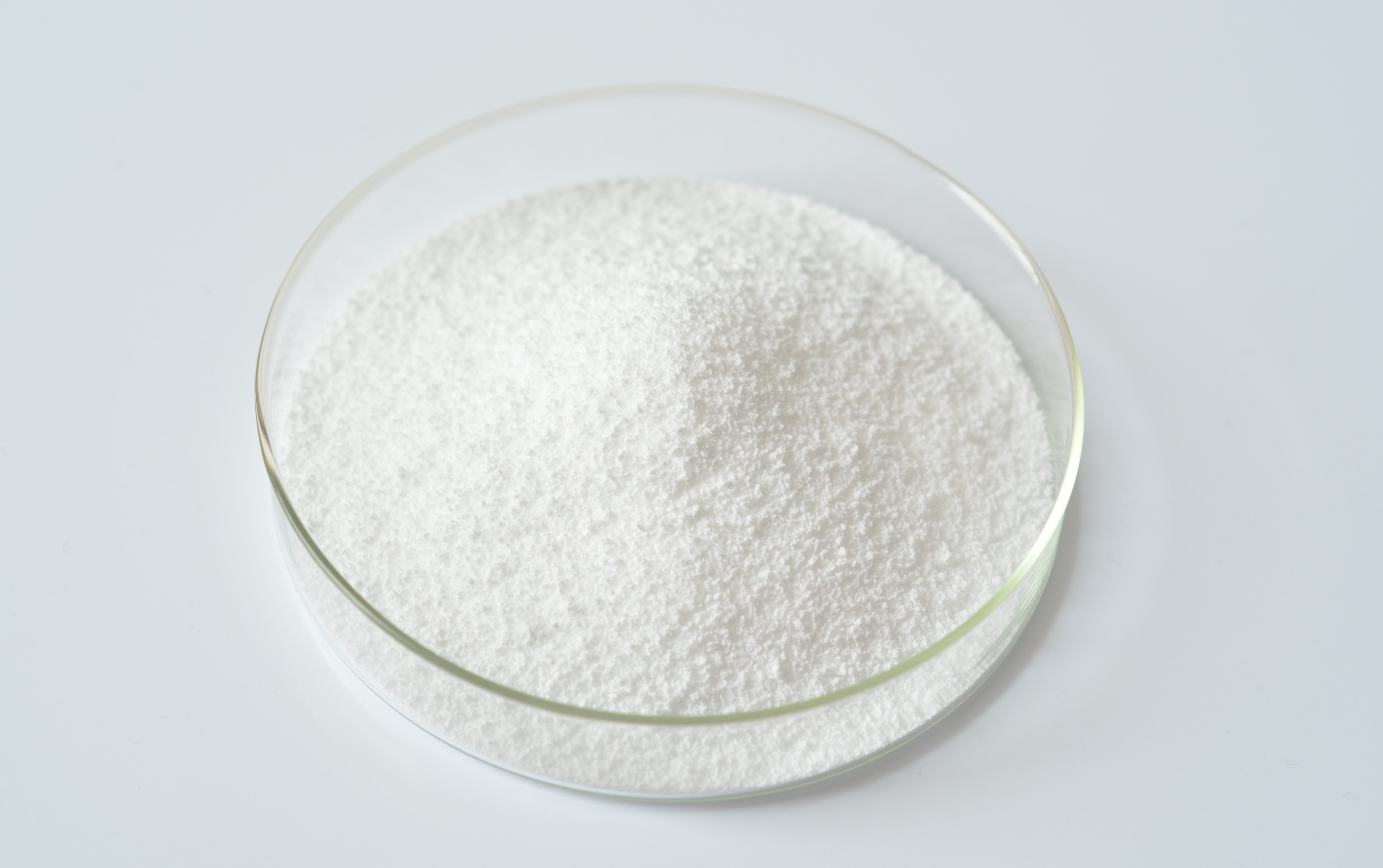
Sample handling before specification review: variant names differ between suppliers, so the numeric range should always be confirmed in writing.
Why “Sodium Hyaluronate” on a Quotation Is Not a Specification
Most sourcing confusion at the awareness stage is a labelling problem, not a supplier problem. A buyer collects three quotations that all read “sodium hyaluronate, cosmetic grade” and treats them as comparable, when one is a 1.0–1.5 million Da powder and another is a hydrolyzed variant from the short-chain family. The price gap that follows is usually interpreted as a supplier difference when it is really a product difference.
Three specific confusions cause this:
- Grade and molecular weight are different labels. Food grade (0.8–1.5 million Da), cosmetic grade (1.0–1.5 million Da) and pharma grade (minimum 2.0 million Da) are application and compliance labels that happen to carry published ranges. High molecular weight grade (minimum 2.0 million Da) and low molecular weight grade (maximum 0.1 million Da) are tiers that are not tied to a single industry. The same tier can appear under more than one grade name.
- Tier names are not standardised. “Hydrolyzed”, “super low” and “ultra low” are technical-commercial names. Their numeric cut-offs are set by each manufacturer and are not interchangeable across suppliers.
- Naming varies for the same polymer. Hyaluronic acid, sodium hyaluronate and hyaluronic acid sodium salt appear interchangeably in catalogues. The specification, not the product title, tells you what is being quoted.
Once those three separations are made, the ladder becomes readable: grade answers “where may this be used”, molecular weight answers “what is this material physically”.
Industry Background: Why Molecular Weight Became a Grade Label
Hyaluronic acid is a commercial category large enough to support a full ladder of grades. Fortune Business Insights reports a global hyaluronic acid market of USD 11.64 billion in 2025, projected to reach USD 22.36 billion by 2034 at a CAGR of 7.52% for 2026–2034. The same source places pharmaceutical grade hyaluronic acid at 69.3% of the product segment share in 2026 — the single largest value block in the category.
China is a distinct sub-market within that total. Cisema reports the Chinese hyaluronic acid market at USD 649.7 million in 2024, projected to reach USD 1.06 billion by 2030, reflecting an 8.6% CAGR from 2025. A large share of the world's sodium hyaluronate raw material is manufactured in this region, which is why grade nomenclature used by Chinese producers tends to travel with the material into export markets.
Production route shapes what the ladder can offer. A 2016 peer-reviewed review describes industrial hyaluronic acid production as based either on extraction from animal tissues or on large-scale bacterial fermentation with genetically modified strains; a 2022 review describes the modern route as microbial biosynthesis combining fermentation and downstream processing, and reports hyaluronic acid yields of 2.5–7.0 g/L from S. zooepidemicus across the fermentation modes examined in the cited studies.
Fermentation sets the upper end of the chain-length range; downstream processing determines what is finally packed. Shandong Habier Biopharma describes its production as low-temperature fermentation synthesis, with a matched equipment set that includes fermentation bioreactors, ultrafiltration purification equipment, sterile mixing tanks, vacuum emulsifiers, cleanroom filling machines, low-temperature drying ovens and microbial and heavy metal testing instruments, operated on a 24/7 basis. Ultrafiltration is the stage at which polymer fractions are separated and concentrated — the practical reason a single fermentation line can deliver several molecular weight tiers rather than one.

Fermenter at Shandong Habier Biopharma's Qufu facility: chain length is established upstream in fermentation and adjusted during downstream purification.
The Molecular Weight Ladder Published for Product 5243
Shandong Habier Biopharma Co.,LTD is a manufacturer of hyaluronic acid and sodium hyaluronate based in Qufu City, Shandong Province, China. The company was established on 14 May 2015, operates a 50,000 m² manufacturing facility with approximately 123 staff and a six-engineer R&D team, and reports an annual production capacity of 600–700 metric tons, with around 20% of output exported to the EU, USA and Korea.
Its sodium hyaluronate, product 5243, is supplied for the food, cosmetic and pharmaceutical industries. The published parameter set assigns numeric windows to five bands:
| Band (product 5243) | Published molecular weight range | Industry position stated for the band |
|---|---|---|
| Food grade | 0.8–1.5 Million Da | Food |
| Cosmetic grade | 1.0–1.5 Million Da | Cosmetic |
| Pharma grade | Min. 2.0 Million Da | Pharmaceutical |
| High molecular weight grade | Min. 2.0 Million Da | Grade-independent tier |
| Low molecular weight grade | Max. 0.1 Million Da | Grade-independent tier |
Two features of that table matter more than the individual numbers. First, food grade and cosmetic grade overlap between 1.0 and 1.5 million Da — a material in that window can satisfy either label, and the deciding factor becomes the compliance file, not the chain length. Second, pharma grade and high molecular weight grade share the same 2.0 million Da floor, which means molecular weight alone cannot tell you that a lot is pharmaceutical. Something else has to.
That “something else” is documented separately. Habier's application notes state that medical and injectable grade products may require sterility and low microbial limits. In China, NMPA Announcement No. 103 of 2022 states that medical sodium hyaluronate products without pharmacological, metabolic or immunological action are managed as medical devices, with a classification no lower than Class II in the described cases. Molecular weight is one input into the grade decision; it is not the decision.
The variant names on the same product
Product 5243 is also listed under a set of variant names that describe the short-chain end of the ladder. These are the names buyers see on quotations, and they do not all carry a published numeric window:
| Variant name listed for product 5243 | Numeric window in the published parameter set | Practical reading |
|---|---|---|
| Hydrolyzed Hyaluronic acid / Hydrolyzed Sodium Hyaluronate | Not stated as a separate numeric range | Confirm the cut-off on the current datasheet before comparing |
| Super low molecular weight (sodium hyaluronate and hyaluronic acid naming) | Not stated as a separate numeric range | Supplier-defined tier; request the specification |
| Ultra low molecular weight (sodium hyaluronate and hyaluronic acid naming) | Not stated as a separate numeric range | Supplier-defined tier; request the specification |
| Low molecular weight | Max. 0.1 Million Da | The only short-chain band with a published numeric ceiling |
| Regular grade | Not stated in the published range list | Confirm against the grade specification in use |
The honest reading of that table is narrow but useful: five bands carry published numbers, and the three hydrolyzed / super low / ultra low names are listed as variants without separate numeric cut-offs in the same parameter list. Anyone comparing those three across suppliers must do it on written specifications, not on the words in the product title.
Reading the Ladder, Step by Step
Step 1 — Convert every figure to the same unit
Put Da, kDa and MDa into one column before comparing anything. A maximum of 0.1 million Da, a maximum of 100,000 Da and a maximum of 100 kDa are the same ceiling; a pharma minimum of 2.0 million Da and a high molecular weight minimum of 2.0 million Da are the same floor.
Step 2 — Separate the grade label from the tier
Write the quotation as two fields: grade (food, cosmetic, pharma) and tier (high, regular, low, super low, ultra low, hydrolyzed). Food grade at 0.8–1.5 million Da and cosmetic grade at 1.0–1.5 million Da share a window, so the grade value must come from the compliance file, not from the number.
Step 3 — Identify which average the certificate reports
Average molecular weight is method-dependent; viscosity-average and weight-average values are not interchangeable. Ask which average and which method sit behind the quoted range, so that two suppliers are not being compared on two different measurements.
Step 4 — Compare ranges, not names, for the short-chain family
Hydrolyzed, super low and ultra low are supplier-defined names. Request the numeric cut-off in writing for each one; where no number is published, treat the name as a starting point for discussion rather than as a specification.
Step 5 — Match the tier to the function in the formula
Habier lists the roles of the material as humectant, viscosity modifier, filler or viscoelastic material. Viscosity-driven roles lean on the longer-chain bands; roles where a lower viscosity at equal solids is wanted lean on the short-chain variants. Decide the function first, then the tier.
Step 6 — Confirm on sample and certificate before bulk
Run the selected tier through the actual formula or process, then match the retained sample against the bulk certificate of analysis. This is the only step that catches a naming mismatch that survived the first five.
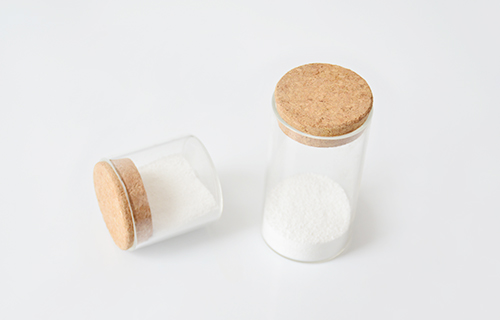
Retaining samples across tiers is what makes a cross-tier comparison meaningful once bulk arrives.
Where Each Tier Fits: Use Cases
Because the ladder is published by application as well as by chain length, the use cases follow the numbers rather than precede them.
Cosmetic skincare raw material blending
Intertek describes hyaluronic acid as a popular active ingredient used in cosmetic formulations such as emulsions and serums, aimed at hydration and skin elasticity. Habier's cosmetic grade is published at 1.0–1.5 million Da, and its documented scenario for this work is cosmetic skincare raw material blending, typically in the United States, where the material functions as humectant, viscosity modifier, filler or viscoelastic material. Blending projects that need a different viscosity profile at the same solids move down the ladder to the low, ultra low, super low or hydrolyzed variants.
Food and supplement manufacturing
Food grade is published at 0.8–1.5 million Da, slightly below the cosmetic window and overlapping it between 1.0 and 1.5 million Da. For a food project, the grade label and its documentation do the compliance work while the molecular weight sets the physical behaviour in the finished product.
Pharmaceutical and medical applications
Pharma grade starts at 2.0 million Da and is the band where the compliance envelope becomes the dominant selection criterion. Habier's notes flag sterility and low microbial limits as requirements for medical and injectable grade material, and the production environment described for that work is aseptic cleanroom operation. In China, the regulatory route for medical sodium hyaluronate products is set by NMPA classification rather than by molecular weight alone.
Viscosity modification and industrial functions
Where the material is used primarily as a viscosity modifier or filler rather than as an active, tier selection is driven almost entirely by rheology at the target solids level — which is the point at which the short-chain variants become commercially interesting rather than merely technically available.
The Ladder at a Glance: What Each Number Confirms and What It Does Not
| Band | Published range (product 5243) | What the number confirms | What it does not confirm |
|---|---|---|---|
| Food grade | 0.8–1.5 Million Da | Chain length window for a food-positioned grade | Microbial limits, documentation package |
| Cosmetic grade | 1.0–1.5 Million Da | Chain length window overlapping food grade between 1.0 and 1.5 | That the lot is unsuitable for food, or vice versa |
| Pharma grade | Min. 2.0 Million Da | Chain length floor shared with high molecular weight grade | Sterility or classification status — those are separate |
| High molecular weight grade | Min. 2.0 Million Da | A tier definition, independent of industry | Which industry the lot is released for |
| Low molecular weight grade | Max. 0.1 Million Da | The only short-chain band with a published ceiling | Where hydrolyzed, super low or ultra low sit numerically |
The pattern in the table is consistent: the grade label carries the compliance meaning, and the molecular weight number carries the physical meaning. Reading one as a proxy for the other is the single most common error at the awareness stage.
FAQ: Sodium Hyaluronate Molecular Weight and Grade Questions
Does a higher molecular weight automatically mean a stricter regulatory grade?
No. Pharma grade and high molecular weight grade share the same 2.0 million Da floor in Habier's published parameters, so chain length cannot be used to infer regulatory status. The separation comes from the compliance envelope: Habier's application notes state that medical and injectable grade products may require sterility and low microbial limits, and the company's qualification system is described as dual ISO certification, HACCP, Kosher and Halal, with the product certified as organic Cosmos and ISO 16128. In China, NMPA Announcement No. 103 of 2022 places medical sodium hyaluronate products without pharmacological, metabolic or immunological action under medical device management, not lower than Class II in the described cases. Molecular weight is one input into grade selection; documentation is the other.
Can the short-chain variants below 0.1 million Da actually be supplied as named products?
Yes — they appear as named variants of product 5243. The listed set covers Hydrolyzed Hyaluronic acid, Low molecular weight sodium hyaluronate, Ultra Low molecular weight sodium hyaluronate and Super low molecular weight sodium hyaluronate, together with the corresponding hyaluronic acid naming and a regular grade, alongside the food, cosmetic and pharma grades and the high and low molecular weight tiers. Supply capability behind that list is stated as 600–700 metric tons per year from a 50,000 m² facility with a six-engineer R&D team, with around 20% of output exported to the EU, USA and Korea. The one caveat is numerical: the published parameter list assigns specific windows to five bands but does not publish separate cut-offs for the hydrolyzed, super low and ultra low names, so those three should be confirmed against the current datasheet.
How much does moving up or down the molecular weight ladder change the cost?
No price is quoted in this article, because the published parameter set contains ranges rather than commercial terms. What can be said is which variables move a quotation: the grade label, the molecular weight tier, the ordered volume, the documentation package required for the destination market, and the packaging format. Two quotations that differ only in tier are not a pricing anomaly — they are two different products, and the comparison should be rebuilt around a fixed grade, a fixed tier and a fixed volume before any cost discussion begins.
Can we test several molecular weight tiers before choosing one?
Sample evaluation is the practical way to settle a tier question, and it should be structured rather than ad hoc. Request paired samples that isolate one variable — for example cosmetic grade at 1.0–1.5 million Da against one short-chain variant — and run both through the same bench test at the same solids level, so that the difference observed is attributable to chain length rather than to a change in the test itself. Keep the retained samples; they become the reference against which bulk certificates of analysis are later checked. Sample and quotation requests for product 5243 are handled through Habier's contact channel: Jake Chen, jake@habier.com, +86-186-0537-487.
What determines the delivery schedule once a tier is chosen?
Three published facts frame the answer. Annual production capacity is stated at 600–700 metric tons; roughly 20% of output is exported, serving the EU, USA and Korea; and the manufacturing operation is described as running 24/7 with in-house microbial and heavy metal testing. No standard lead time is published in the product parameter set, so schedule should be confirmed at quotation stage against the specific grade, tier and documentation package. The fastest way to open that conversation is to send the target specification — grade plus molecular weight range plus volume — and ask for a written quotation and the current datasheet in the same reply.
Next Step: Match the Tier to the Project, Not the Name
If the ladder is now clear but the tier is not, start with the documents rather than the price. Habier's product catalogue covers food, cosmetic and pharma grades and the hydrolyzed, super low, ultra low, low, regular and high molecular weight variants, with the published ranges and qualification details in one place.
Download the Habier product catalogue (PDF)
For a sample, a quotation or a specification check on product 5243, contact Jake Chen at jake@habier.com or +86-186-0537-487, or visit www.habier.com.
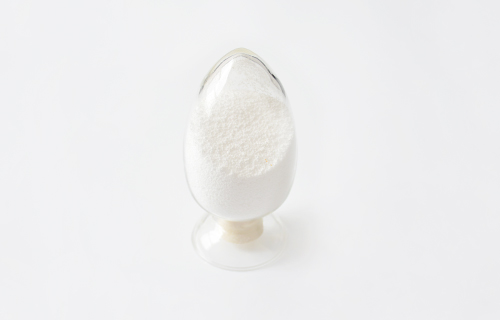
Request samples by tier, not by product name, so that the comparison isolates molecular weight as the only variable.
Conclusion: Molecular Weight Is the Map, Grade Is the Destination
Sodium hyaluronate molecular weight is best understood as a map rather than a ranking. The short-chain variants — hydrolyzed hyaluronic acid, super low and ultra low — sit at one end; low molecular weight grade is defined with a ceiling of 0.1 million Da; food grade runs 0.8–1.5 million Da and cosmetic grade 1.0–1.5 million Da; high molecular weight grade and pharma grade both start at 2.0 million Da. Higher is not better and lower is not better — the correct tier is the one that delivers the required function in the formula or process.
Grade is the destination layered on top of that map. It determines where the material may be used and what documentation must accompany it, and it is the reason two lots with identical molecular weight ranges can end up in entirely different regulatory categories. Buyers who separate the two labels early avoid the most expensive version of this mistake: bulk material that meets a number but not a specification.
Have Questions or Need More Details?
Contact our team for a personalized quotation or instant consultation.
Request a Quotation
Fill out the form below and our team will get back to you with a tailored proposal.
WhatsApp Direct Chat
Prefer to chat in real-time? Message us on WhatsApp for instant assistance & quick answers.
- Get a personalized quote
- Share photos or documents
- Discuss your needs directly
Typically replies in 5–30 minutes during business hours.