
Long-Term Sodium Hyaluronate Partnership: A Buyer FAQ
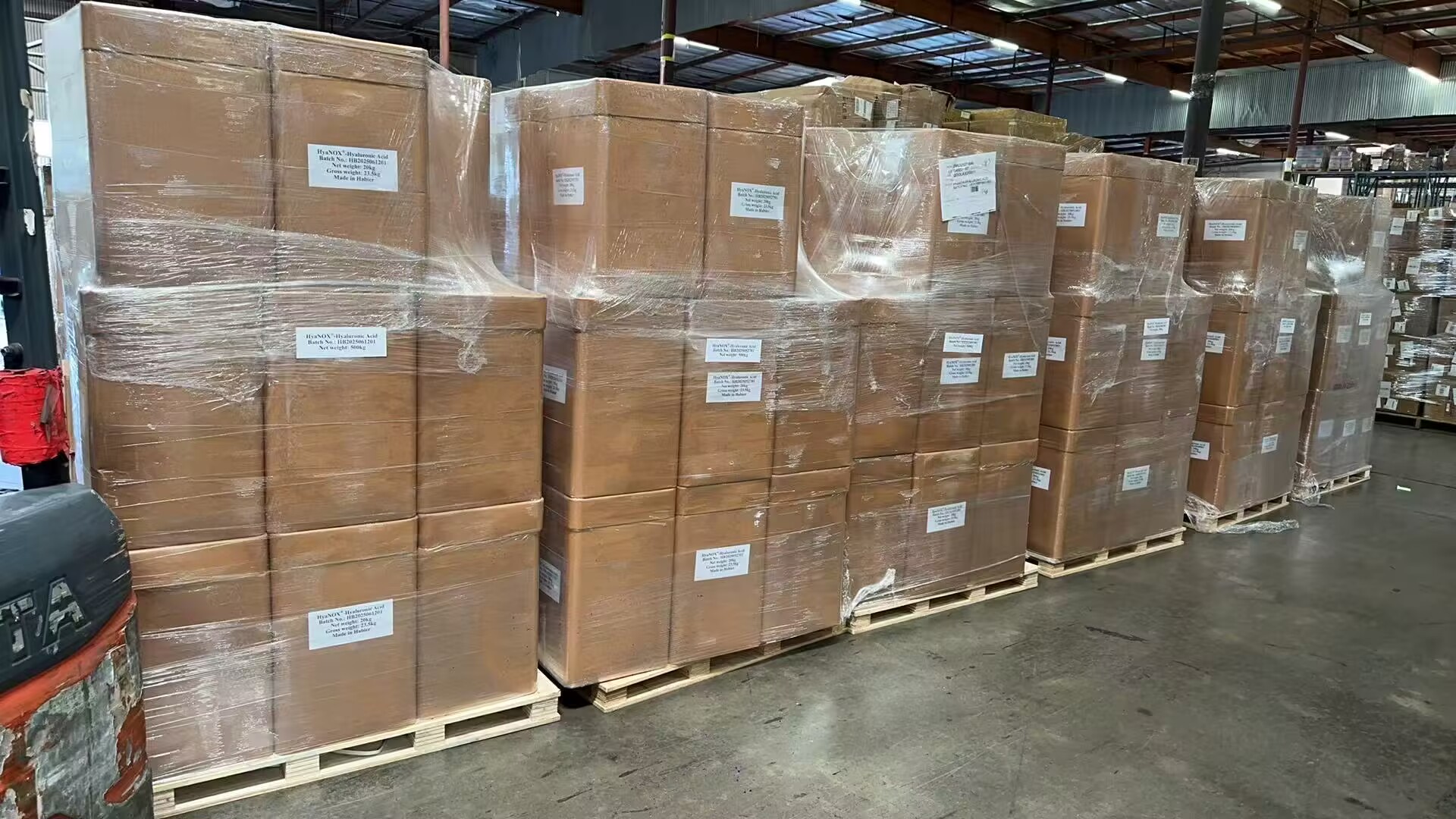
A long-term sodium hyaluronate partnership is a supply arrangement in which one qualified manufacturer delivers repeated batches of the same grade, the same molecular weight tier and the same documentation standard over an extended period. Four elements decide whether that arrangement survives past the first reorder: batch-to-batch consistency, documentation that stays valid, predictable lead times, and a reorder routine the buyer can build inventory around.
Shandong Habier Biopharma Co.,LTD is a sodium hyaluronate manufacturer established in 2015 in Qufu City, Shandong Province, China. The company operates a 50,000 m² facility with 123 employees, an annual output of 600–700 MT and a six-engineer R&D team, and supplies food grade sodium hyaluronate, cosmetic grade sodium hyaluronate and pharma grade sodium hyaluronate alongside hydrolyzed, low molecule weight, ultra low molecule weight, super low molecule weight, regular grade and high molecule weight hyaluronic acid.
The questions below are the ones that actually surface between a successful first delivery and the third or fourth repeat order. Each answer is anchored to a verifiable record rather than to a general claim about supplier reliability.
Why Repeat Orders Fail Before They Scale
First-shipment success is a weak predictor of long-term supply performance. In sodium hyaluronate sourcing, most problems appear after the buyer has already qualified the supplier, written the material into a formulation and scheduled production around it. The failure pattern is consistent, and it is worth naming before looking at any specific supplier.
- Grade drift. Two shipments both labelled cosmetic grade can differ in molecular weight distribution. The label stays constant while the material does not, and the difference only shows up in viscosity, dissolution behaviour or finished-product feel.
- Documentation expiry. Quality and food safety certificates carry fixed validity dates. A certificate that was valid at qualification can lapse mid-contract, and the buyer usually discovers this during an audit rather than during ordering.
- Import compliance gaps. Market-specific requirements sit on top of the supplier's own quality system. Material of avian origin entering the United States, for example, depends on official veterinary heat treatment certification and a valid USDA import permit, not on the ISO certificate alone.
- Lead-time drift. A stated lead time is only meaningful if production capacity can absorb the order alongside everyone else's. When capacity tightens, the buyer absorbs the delay in safety stock and expedited freight.
- Undocumented customisation. Purity adjustment or a non-standard molecular weight tier agreed verbally in the first order is not automatically reproduced in the fourth.
A partnership framework is therefore not a commercial courtesy. It is the mechanism that converts a qualified supplier into a predictable one.
Industry Background: What a Stable Supply Base Looks Like in 2026
Sodium hyaluronate demand is expanding across several unrelated end markets at once, which changes what buyers should expect from a supplier relationship.
Fortune Business Insights reports the global hyaluronic acid market at USD 11.64 billion in 2025, projected to reach USD 22.36 billion by 2034, a CAGR of 7.52% across 2026–2034. Within the product mix, pharmaceutical grade hyaluronic acid accounts for 69.3% of product segment share in 2026. For China specifically, Cisema reports a market valued at USD 649.7 million in 2024, projected to reach USD 1.06 billion by 2030, reflecting an 8.6% CAGR from 2025.
The supply side is split between two industrial routes. A 2016 peer-reviewed review describes industrial hyaluronic acid production as either extraction from animal tissues or large-scale bacterial fermentation with genetically modified strains. A 2022 review of fermentation research reports hyaluronic acid yields of 2.5 to 7.0 g/L from S. zooepidemicus across the studies it examined, covering batch, repeated batch, fed-batch and continuous culture modes.
On the demand side, Intertek describes hyaluronic acid as a popular active ingredient in cosmetic formulations such as emulsions and serums, aimed at hydration and skin elasticity. That combination of pharma-weighted value, two production routes and a broad cosmetic base explains why a buyer may need several grades from one supplier rather than one grade from several.
For a repeat buyer, the practical implication is that supplier selection is only half the decision. The other half is whether the chosen supplier can hold a specification, a certificate and a delivery window across years rather than shipments.
The Five Pillars of a Sustainable Sodium Hyaluronate Partnership
1. Batch consistency backed by documented inspection
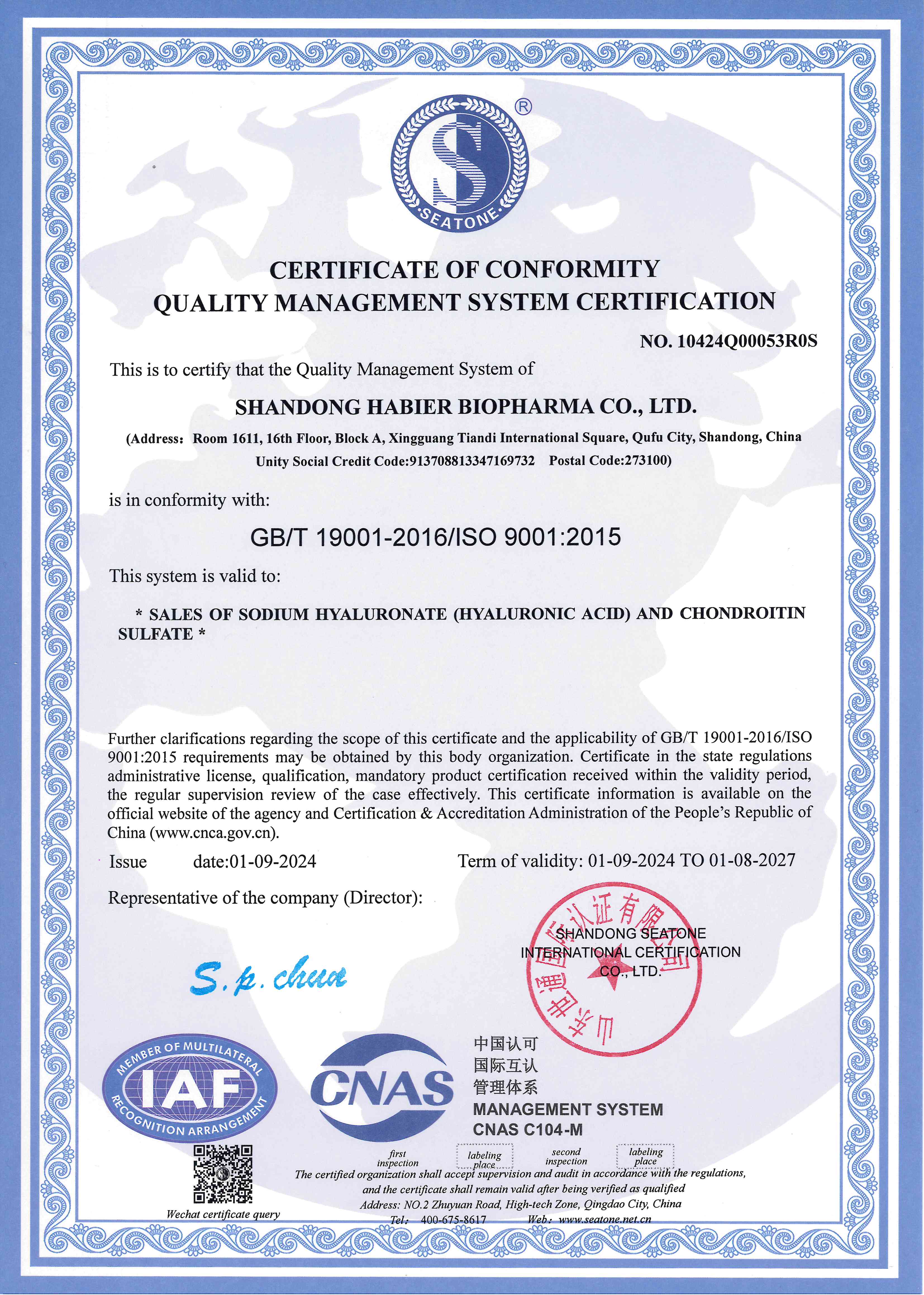
Consistency is a process output, not a promise. At Shandong Habier Biopharma Co.,LTD, quality control is defined as 100% full inspection before delivery, which means each batch is examined rather than sampled on a statistical basis before release. That inspection step sits inside a certified quality system: the company holds ISO 9001:2015 certification under GB/T 19001-2016, certificate number 1042Q00053R0S, issued on 2024-09-01 by SHANDONG SEATONE INTERNATIONAL CERTIFICATION CO.,LTD and valid until 2027-01-08.
For a buyer, the value of a named certificate number is that it can be checked, dated and diarised. A repeat order is only as stable as the system that releases each batch.
2. Grade and molecular weight held to a written specification
Most quality disputes trace back to an unwritten molecular weight expectation. The published grade ranges remove that ambiguity:
- Food grade sodium hyaluronate: 0.8–1.5 million Da
- Cosmetic grade sodium hyaluronate: 1.0–1.5 million Da
- Pharma grade sodium hyaluronate: minimum 2.0 million Da
- High molecule weight grade: minimum 2.0 million Da
- Low molecule weight grade: maximum 0.1 million Da
The wider portfolio also covers hydrolyzed sodium hyaluronate, ultra low molecule weight and super low molecule weight grades, plus regular grade sodium hyaluronate and the corresponding hyaluronic acid forms. A buyer running both a surface-film cosmetic product and a low-viscosity serum can therefore consolidate two specifications under one supplier relationship without renegotiating the quality system.
3. Capacity and lead time that survive a reorder
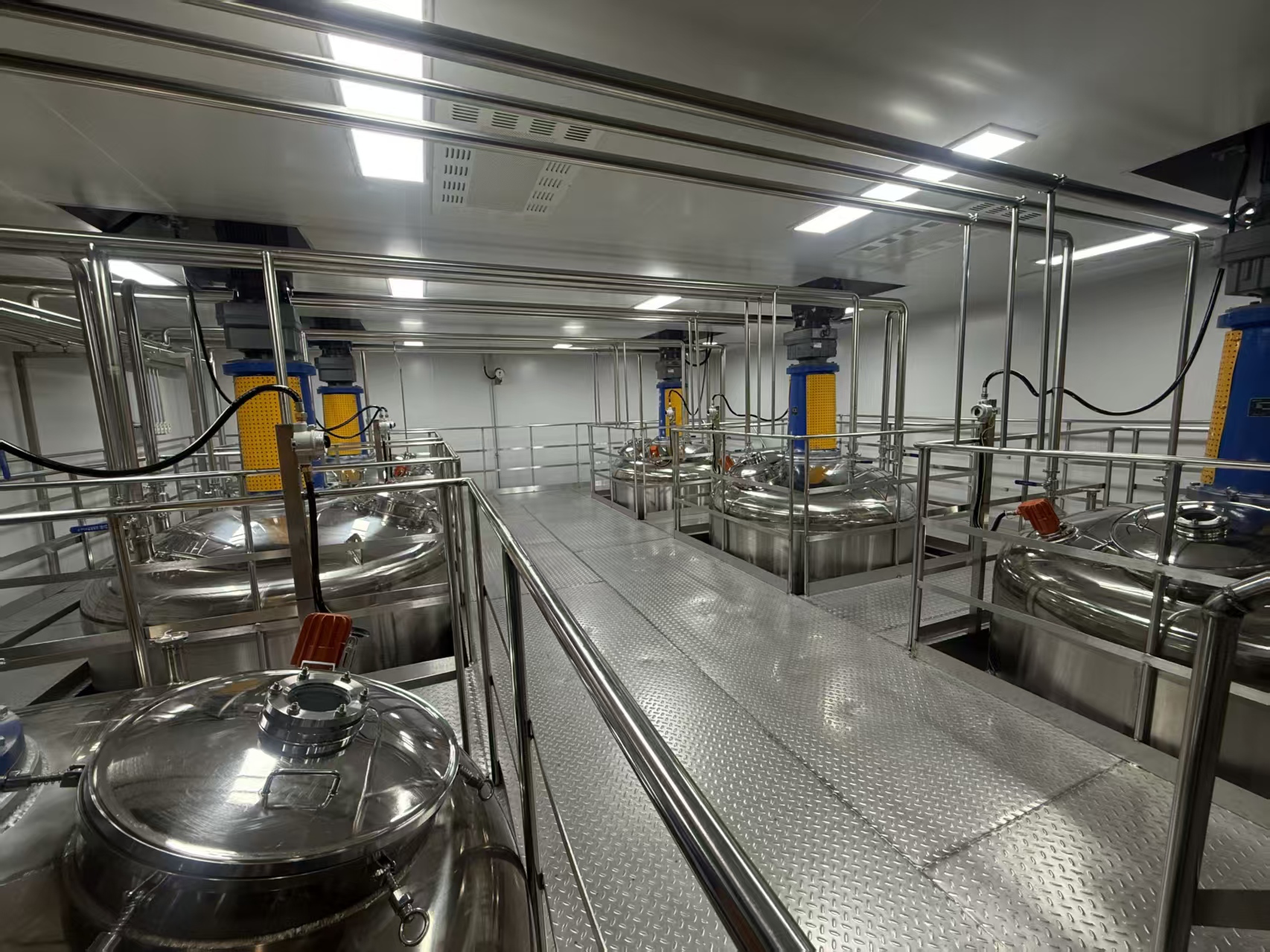
A lead time is only credible when it sits on top of real capacity. Shandong Habier Biopharma Co.,LTD states a monthly capacity of 50–60 ton against an annual output of 600–700 MT, with a stated lead time of 5–8 days and a minimum order quantity of 1 kg. The 1 kg MOQ matters more than it appears: it lets a buyer validate a grade at laboratory scale, move to pilot volume, and then scale to production without switching suppliers mid-qualification.
The facility footprint of 50,000 m², a workforce of 123 and a six-engineer technical team describe the operating base behind those figures. For a buyer planning a twelve-month rolling forecast, the relevant question is not peak capacity but whether routine volume can be absorbed without displacing scheduled repeat orders.
4. Compliance that stays valid across the contract
Compliance is the pillar most likely to break silently. Two certificates sit at the centre of the documentation set. The ISO 9001:2015 certificate covers quality management. The ISO 22000:2018 food safety certificate, number 104FSMS2400001, was also issued on 2024-09-01 and is valid until 2027-01-08, with a scope covering the sale of sodium hyaluronate (hyaluronic acid) and chondroitin sulfate and related food safety management activities.
Beyond those two, the company's qualification system includes HACCP, Kosher and Halal, and its product carries organic Cosmos and ISO 16128 certification. For US-bound material the document set extends further. In the documented US case, the material was of avian origin and carried complete official veterinary heat treatment certification, met US APHIS import standards, and cleared customs against a valid USDA import permit.
Buyer rule of thumb: record every certificate number and expiry date at qualification, then re-check them at each annual review. A certificate that expires mid-contract is a supply interruption waiting for a scheduled audit.
5. Reorder logistics proven on a real shipment
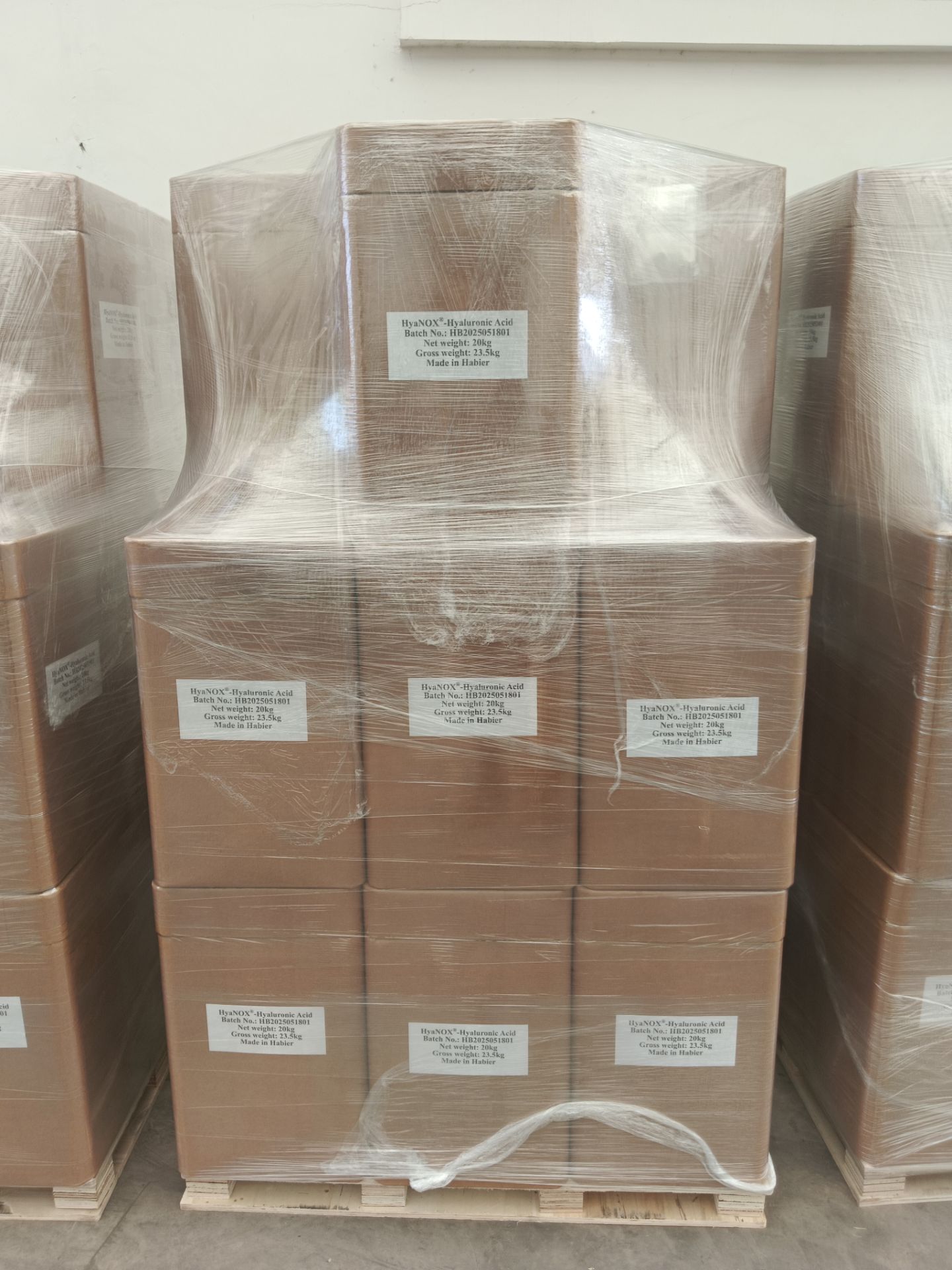
The clearest evidence of reorder capability is a shipment that actually moved. In the United States, a case involved the supply of 4,733 kg of high-purity hyaluronic acid raw material to a natural cosmetic and health supplement importer. The material was used as cosmetic raw material and as oral health care supplement raw material.
Stable supply of high-purity hyaluronic acid met the customer's laboratory, cosmetic and oral care mass production demands. Customs clearance was smooth, supported by the valid USDA import permit, and stable batch quality enabled long-term repeat order cooperation with consistent batch quality across shipments. That combination — documentation, clearance and repeatability — is what a partnership framework is meant to protect.
Step-by-Step: Building a Repeat-Order Agreement That Holds
The sequence below converts the five pillars into a working process. Each step produces a document the buyer can hold the supplier to later.
- Write the grade and molecular weight tier into the specification. State the grade (food, cosmetic or pharma) and the molecular weight range in numbers, not adjectives. A specification that says cosmetic grade but omits the 1.0–1.5 million Da window leaves room for drift.
- Validate with a sample before committing volume. Free sample supply is available for evaluation, and a 1 kg minimum order allows a first commercial batch small enough to test in the actual formulation.
- Collect the certificate set and diarise the expiry dates. Record the ISO 9001 certificate 1042Q00053R0S and the ISO 22000 certificate 104FSMS2400001, both valid until 2027-01-08, together with HACCP, Kosher and Halal documentation and the organic Cosmos and ISO 16128 product certification.
- Confirm the market-specific import file. For US-bound material of avian origin, confirm the official veterinary heat treatment certification, US APHIS conformity and the USDA import permit before the first shipment is booked.
- Release the first commercial order and keep the batch record. Retain the certificate of analysis for each batch, since the comparison in the next step depends on having the earlier record on file.
- Compare batch records side by side. Place the first and second batch analyses on the same page and check molecular weight, purity and appearance against the specification. This is where consistency is confirmed or caught early.
- Set the reorder cadence against capacity and lead time. With 50–60 ton per month of capacity and a 5–8 day lead time, the buyer can size safety stock to the delivery window rather than to the worst case.
- Review annually. Re-check certificate validity, specification alignment and quality tracking records. After-sales quality tracking is supplied precisely so this review has data to work with.
Use Cases: Where Long-Term Supply Matters Most
US cosmetic and oral supplement importer
A natural cosmetic and health supplement importer in the United States used 4,733 kg of high-purity hyaluronic acid raw material across both cosmetic and oral health care supplement applications under long-term repeat order cooperation. The binding constraint here was not price but documentation: avian-origin material required official veterinary heat treatment certification, US APHIS conformity and a valid USDA import permit for smooth clearance.
Food grade supplement projects
Food and supplement formulations typically run on food grade sodium hyaluronate in the 0.8–1.5 million Da range. Because the grade sits inside the ISO 22000 food safety scope, the certificate set and the material specification align by design rather than by negotiation.
Cosmetic formulation projects
Cosmetic grade sodium hyaluronate at 1.0–1.5 million Da supports hydration and skin elasticity positioning in emulsions and serums. Buyers building a multi-weight system can pair it with low molecule weight grade at 0.1 million Da or below, or with hydrolyzed and ultra low molecule weight variants, without adding a second supplier.
Pharma grade projects
Pharma grade sodium hyaluronate at a minimum of 2.0 million Da sits at the high end of the molecular weight range, matching the segment that accounts for 69.3% of product share by value. Buyers here should treat documentation continuity as a contractual requirement rather than an administrative task.
Long-Term Partnership Evaluation Table
The table below lists what a buyer must confirm before extending a supply agreement, and the corresponding documented position at Shandong Habier Biopharma Co.,LTD.
| Evaluation dimension | What the buyer must confirm | Documented position | Verification route |
|---|---|---|---|
| Quality management system | Valid ISO 9001 certification covering the supplied product | ISO 9001:2015 (GB/T 19001-2016), certificate 1042Q00053R0S, issued 2024-09-01, valid to 2027-01-08 | Certificate copy; issuing body SHANDONG SEATONE INTERNATIONAL CERTIFICATION CO.,LTD |
| Food safety management | ISO 22000 coverage for sodium hyaluronate sales and related food safety activities | ISO 22000:2018, certificate 104FSMS2400001, issued 2024-09-01, valid to 2027-01-08 | Certificate copy |
| Additional schemes | HACCP, Kosher, Halal plus product-level certification | HACCP, Kosher and Halal in the qualification system; organic Cosmos and ISO 16128 product certification | Document request per order |
| Grade and molecular weight | Written numeric specification per grade | Food 0.8–1.5 MDa; cosmetic 1.0–1.5 MDa; pharma min. 2.0 MDa; high MW min. 2.0 MDa; low MW max. 0.1 MDa | Product specification sheet |
| Capacity | Monthly output that covers forecast volume | 50–60 ton per month; annual output 600–700 MT; 50,000 m² facility | Capacity statement |
| Order size and lead time | MOQ and delivery window in writing | MOQ 1 kg; lead time 5–8 days | Quotation |
| Batch release | Inspection before shipment | 100% full inspection before delivery | Batch record and certificate of analysis |
| Export experience | Prior shipments into the target market | Export markets EU and USA; export ratio 20%; main markets EU/USA/KOREA | Shipping references |
| US import compliance | Official veterinary heat treatment certification, US APHIS conformity and USDA import permit for avian-origin material | Documented in the 4,733 kg US case, with smooth customs clearance | Case documentation |
| After-sales | Sample support and quality tracking across reorders | Free sample supply; after-sales quality tracking | Contract terms |
FAQ: Quality, Logistics and Reorders
1. What compliance documents should stay valid across a multi-year sodium hyaluronate agreement?
At minimum, four layers. The quality layer is the ISO 9001:2015 certificate 1042Q00053R0S, valid to 2027-01-08. The food safety layer is the ISO 22000:2018 certificate 104FSMS2400001, valid to the same date, with a scope covering the sale of sodium hyaluronate (hyaluronic acid) and chondroitin sulfate and related food safety management activities. The scheme layer covers HACCP, Kosher and Halal, plus organic Cosmos and ISO 16128 product certification. The market access layer is destination-specific: for US-bound material of avian origin, the file must include official veterinary heat treatment certification, US APHIS conformity and a valid USDA import permit, as documented in the 4,733 kg US case. Buyers should record both certificate numbers and both expiry dates at signature and re-check them at every annual review.
2. Can batch quality stay consistent from the first order to the tenth?
Consistency depends on two things: whether every batch is inspected, and whether production capacity is sufficient to avoid substitution under pressure. Shandong Habier Biopharma Co.,LTD applies 100% full inspection before delivery inside its ISO 9001 and ISO 22000 systems, and operates 50–60 ton of monthly capacity against 600–700 MT of annual output. The practical proof point is the US partnership, where stable batch quality supported long-term repeat order cooperation across cosmetic and oral care production. Where a buyer needs purity adjustment, the OEM/ODM route and a six-engineer technical team allow that requirement to be specified in writing rather than agreed verbally.
3. How should budget be planned around a long-term agreement?
Quotation is set by grade, molecular weight tier and order volume, so a single public price band would be misleading across food, cosmetic and pharma grades. What can be planned with confidence is the commercial structure. A 1 kg minimum order lets a buyer start at validation scale and step up only after the grade is confirmed. A 5–8 day lead time against 50–60 ton of monthly capacity reduces the safety stock needed to cover delivery variability, and that working-capital saving is usually larger than a marginal unit-price difference. Buyers should request the quotation with the specification attached, so price and molecular weight tier are locked together.
4. Can we validate with samples before committing to repeat orders?
Yes. Free sample supply is available for evaluation, and the 1 kg minimum order allows a first commercial batch small enough to run in the actual formulation before production volume is committed. Certification is available to accompany the sample where the buyer's own audit requires it: ISO 9001:2015 certificate 1042Q00053R0S, ISO 22000:2018 certificate 104FSMS2400001, and the HACCP, Kosher, Halal, organic Cosmos and ISO 16128 documentation. After-sales quality tracking then continues through the repeat-order phase, so the sample baseline and the production batches are measured against the same record.
5. What delivery and logistics performance should a repeat buyer expect?
The stated lead time is 5–8 days, supported by 50–60 ton of monthly capacity. Export experience covers the EU and USA, with main markets listed as EU, USA and Korea and an export ratio of 20%. For US shipments, the logistics file matters as much as the schedule: in the 4,733 kg case, material of avian origin with complete official veterinary heat treatment certification met US APHIS import standards and cleared customs smoothly against a valid USDA import permit. Buyers planning a reorder cycle should confirm that the market-specific documents are current before each booking, not only at the start of the contract.
Conclusion
A sodium hyaluronate partnership is durable when four things are documented rather than assumed: the molecular weight window, the batch release rule, the certificate expiry dates, and the delivery window. Everything else — pricing, order volume, escalation contacts — sits on top of those four.
Shandong Habier Biopharma Co.,LTD operates a 50,000 m² facility in Qufu City, Shandong Province, with 123 employees, 600–700 MT of annual output, 50–60 ton of monthly capacity, a 5–8 day lead time and a 1 kg minimum order. Its quality and food safety systems are certified to ISO 9001:2015 and ISO 22000:2018, both valid to 2027-01-08, with HACCP, Kosher, Halal, organic Cosmos and ISO 16128 alongside. The 4,733 kg US supply case, delivered to a natural cosmetic and health supplement importer under long-term repeat order cooperation with stable batch quality and smooth customs clearance, shows what those documents look like when they are used rather than filed.
Next step for evaluating buyers
Request a sample of the specific grade and molecular weight tier you are qualifying, together with the current certificate set, or ask for a quotation built around your forecast volume and reorder cadence.
Email: jake@habier.com | Tel: +86-186-0537-0487 | Web: www.habier.com
Contact: Jake Chen | Address: 16F Building A Xingguangtiandi International Square, Qufu City, Shandong, China 273100
Download the product catalogue: Shandong Habier Biopharma brochure (PDF)
Have Questions or Need More Details?
Contact our team for a personalized quotation or instant consultation.
Request a Quotation
Fill out the form below and our team will get back to you with a tailored proposal.
WhatsApp Direct Chat
Prefer to chat in real-time? Message us on WhatsApp for instant assistance & quick answers.
- Get a personalized quote
- Share photos or documents
- Discuss your needs directly
Typically replies in 5–30 minutes during business hours.