
Top Sodium Hyaluronate Suppliers: Buyer's Guide
Top Sodium Hyaluronate Suppliers: A Comprehensive Buyer's Guide
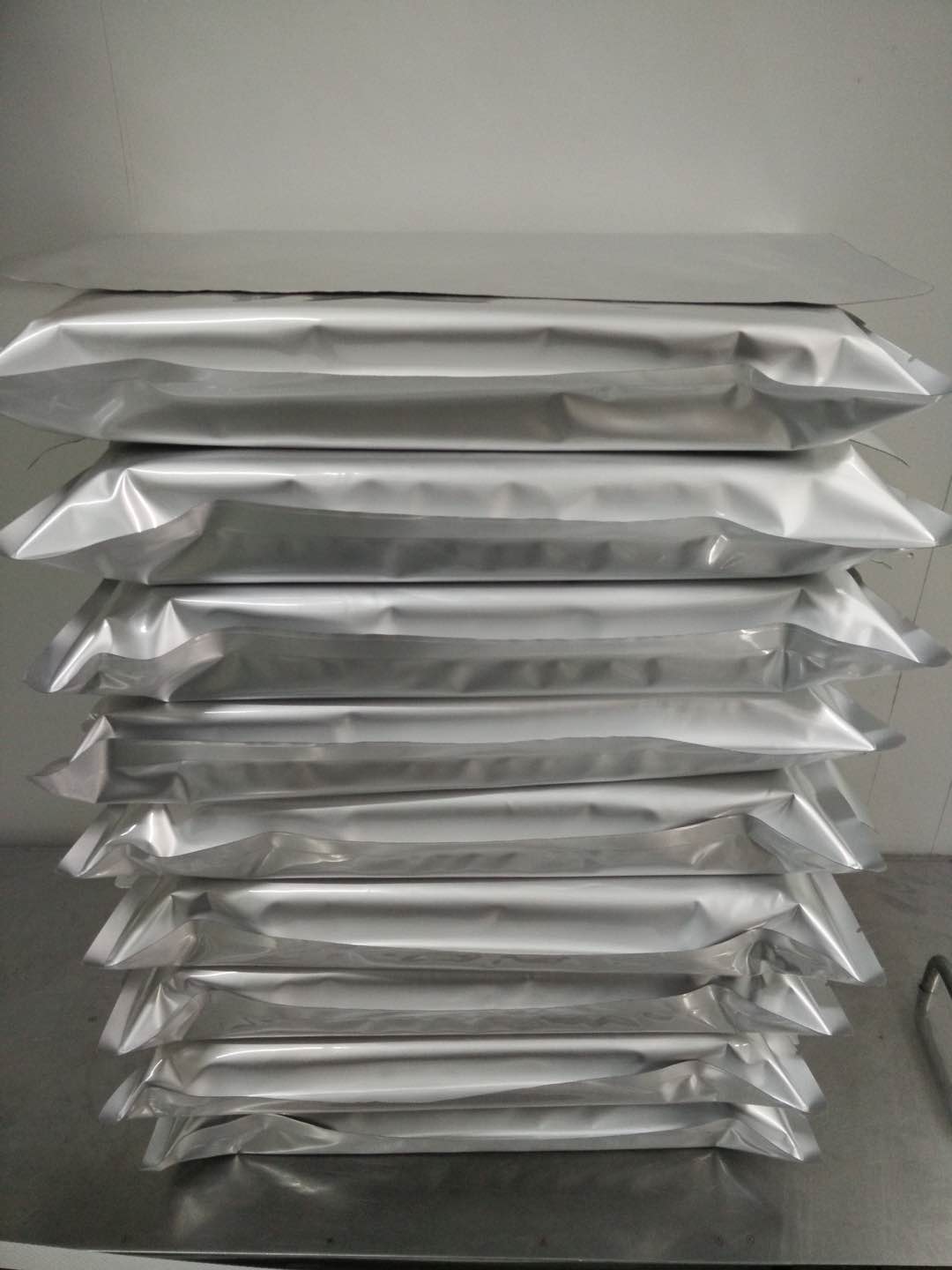
High-purity sodium hyaluronate in aluminum foil bulk packaging – a common format from leading manufacturers.
In the rapidly growing market for hyaluronic acid products, sourcing from a reliable sodium hyaluronate supplier is critical for food, cosmetic, and pharmaceutical companies. This guide provides procurement professionals with a structured approach to identifying and evaluating top-ranked suppliers, ensuring consistent quality, regulatory compliance, and cost efficiency.
What is Sodium Hyaluronate?
Sodium hyaluronate (also known as hyaluronic acid sodium salt) is the sodium salt form of hyaluronic acid, a naturally occurring glycosaminoglycan. It is widely used as a humectant, viscosity modifier, filler, and viscoelastic material in personal care, nutraceuticals, and medical devices. Depending on molecular weight, it can be classified into food grade, cosmetic grade, and pharma grade, each serving distinct applications.
Why Supplier Selection Matters
Choosing the wrong sodium hyaluronate supplier can lead to batch inconsistency, regulatory non-compliance, supply disruptions, and financial losses. According to industry data, over 30% of quality issues in finished products trace back to raw material variability. A top-ranked supplier mitigates these risks through rigorous process control, comprehensive certifications, and proven export experience.
Industry Background: Food, Cosmetic & Pharma Grades
The global sodium hyaluronate market is segmented into three primary grades:
- Food Grade (0.8-1.5 Million Da) – Used in dietary supplements and functional foods for joint health and skin hydration.
- Cosmetic Grade (1.0-1.5 Million Da) – The most common grade for serums, creams, and injectable fillers (non-medical).
- Pharma Grade (Min. 2.0 Million Da) – Required for ophthalmic solutions, intra-articular injections, and wound dressings, demanding high purity and sterility.
Additional specialized categories include high molecular weight (≥2.0 MDa), low molecular weight (≤0.1 MDa), and ultra-low molecular weight variants, each with unique performance characteristics.
Key Factors for Selecting a Top-Ranked Sodium Hyaluronate Supplier
1. Quality and Purity
A reputable supplier performs 100% full inspection before delivery, with independent QC laboratory testing for each batch. Look for suppliers that provide a Certificate of Analysis (COA) with every shipment, detailing molecular weight, purity, heavy metals, and microbial limits. For pharma grade, sterility and endotoxin testing are mandatory.
2. Molecular Weight Segmentation
Different applications demand different molecular weight ranges. A top supplier offers clear segmentation and consistent batch-to-batch viscosity. For example, Shandong Habier Biopharma produces grades from 0.1 MDa (low MW) up to >2.0 MDa (high MW), enabling clients to select precisely for their formulation needs.
| Grade | Molecular Weight | Typical Application |
|---|---|---|
| Food Grade | 0.8-1.5 Million Da | Oral supplements, functional beverages |
| Cosmetic Grade | 1.0-1.5 Million Da | Skincare serums, moisturizers |
| Pharma Grade | Min. 2.0 Million Da | Ophthalmic drops, joint injections |
| Low MW Grade | ≤0.1 Million Da | Anti-aging cosmeceuticals, deep penetration |
3. Certifications and Compliance
Global buyers require suppliers to hold internationally recognized certifications. Key credentials include ISO 9001 (quality management), ISO 22000 (food safety), Kosher, Halal, and organic certifications such as COSMOS and ISO 16128. These documents demonstrate a supplier's commitment to regulatory compliance and product safety.
For example, Shandong Habier Biopharma Co., LTD holds ISO 9001:2015 (cert# 1042Q00053R0S), ISO 22000:2018 (cert# 104FSMS2400001), along with Kosher, Halal, and Ecocert Cosmos certifications. This comprehensive certification portfolio ensures smooth customs clearance and market access in EU, USA, and Korea.
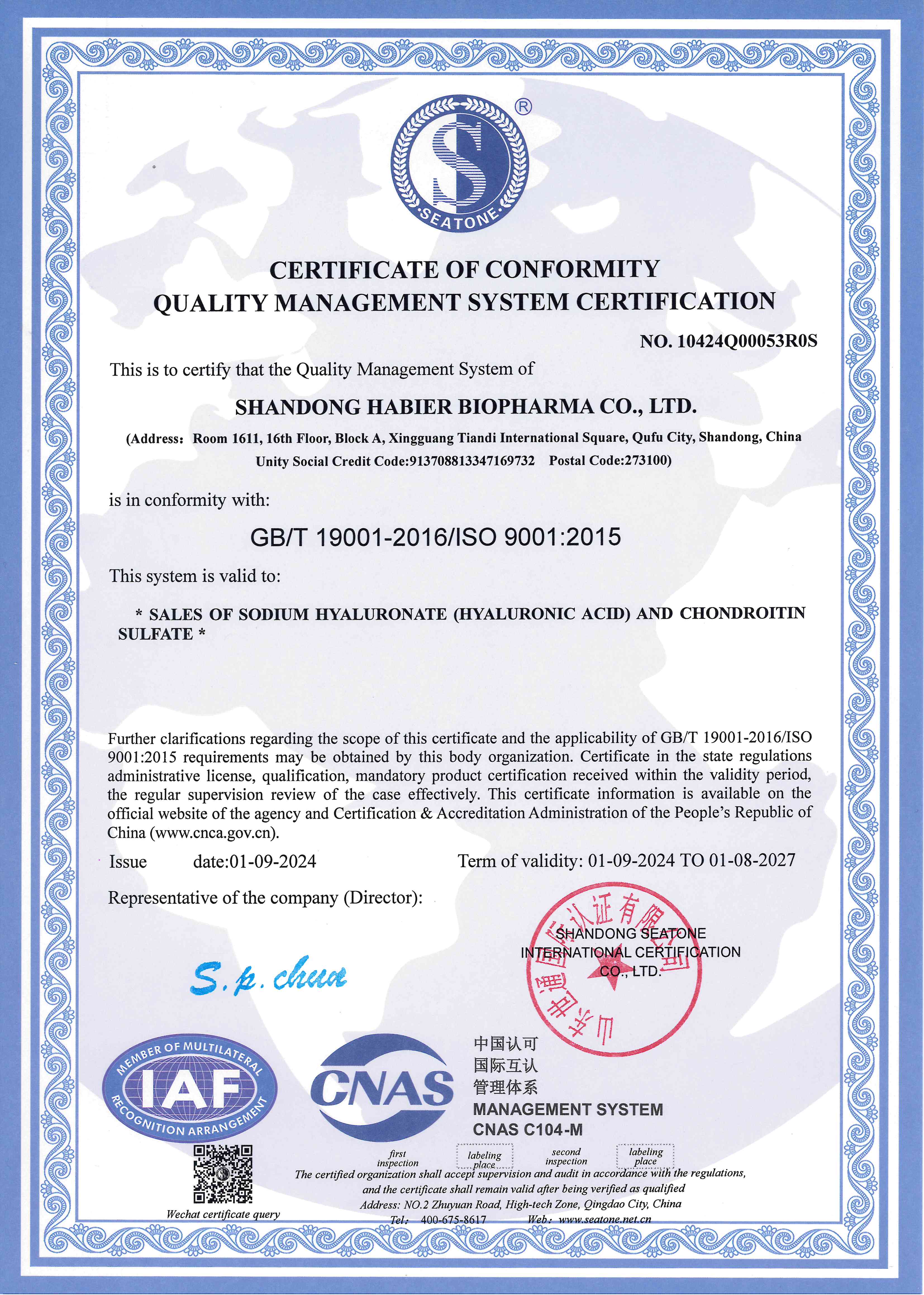
ISO 9001:2015 certificate – a baseline requirement for top sodium hyaluronate suppliers.
4. Production Capacity and Lead Time
Annual output, monthly capacity, and lead time are critical for supply chain planning. A top supplier should have a factory size of at least 10,000 m², with fermentation and purification facilities. Shandong Habier operates a 50,000 m² facility with annual output of 600-700 MT, monthly capacity of 50-60 tons, and standard lead time of 5-8 days, enabling reliable fulfillment of bulk orders.
5. Customization and Technical Support
Many buyers need customized molecular weight, particle size, or packaging. Suppliers offering OEM/ODM services with purity adjustment capabilities are preferred. A dedicated R&D team (e.g., 6 engineers) and after-sales technical support add significant value.
6. Export Experience and Market Knowledge
Suppliers with a proven track record in your target market understand local regulations and import requirements. For instance, avian-origin hyaluronic acid requires USDA APHIS import permits and veterinary heat treatment certification. Top suppliers already have experience with these documents, as demonstrated in a recent US case involving 4733 kg of hyaluronic acid shipped to a natural cosmetic importer with smooth customs clearance.
Step-by-Step Supplier Evaluation Process
- Define your grade & molecular weight requirement – Match application to the appropriate grade (food/cosmetic/pharma).
- Shortlist suppliers with verified certifications – Request copies of ISO, Kosher, Halal, and organic certificates.
- Request COAs for at least 3 batches – Evaluate consistency of molecular weight, viscosity, and purity.
- Audit production capacity – Confirm annual output, lead time, and ability to scale.
- Check export compliance – For EU: meet REACH; for USA: USDA import permit; for Korea: KFDA registration.
- Ask for client references or case studies – Especially in your industry segment.
- Request a free sample – Test the raw material in your own formulation before committing.
Real-World Case Study: United States Natural Cosmetic Importer
A natural cosmetic and health supplement importer in the United States needed a high-purity hyaluronic acid raw material for both laboratory development and commercial mass production. They selected Shandong Habier Biopharma as their supplier, ordering a total of 4733 kg of sodium hyaluronate (product 5243). The material was of avian origin and accompanied by complete veterinary heat treatment certification, meeting US APHIS import standards.
Thanks to stable batch quality and a valid USDA import permit, the shipment cleared customs smoothly. The customer achieved stable supply of high-purity hyaluronic acid and established a long-term repeat order partnership, using the material for cosmetic raw material and oral health care supplement raw material. This case illustrates how a top-ranked supplier can meet the demands of laboratory, cosmetic, and oral care mass production simultaneously.
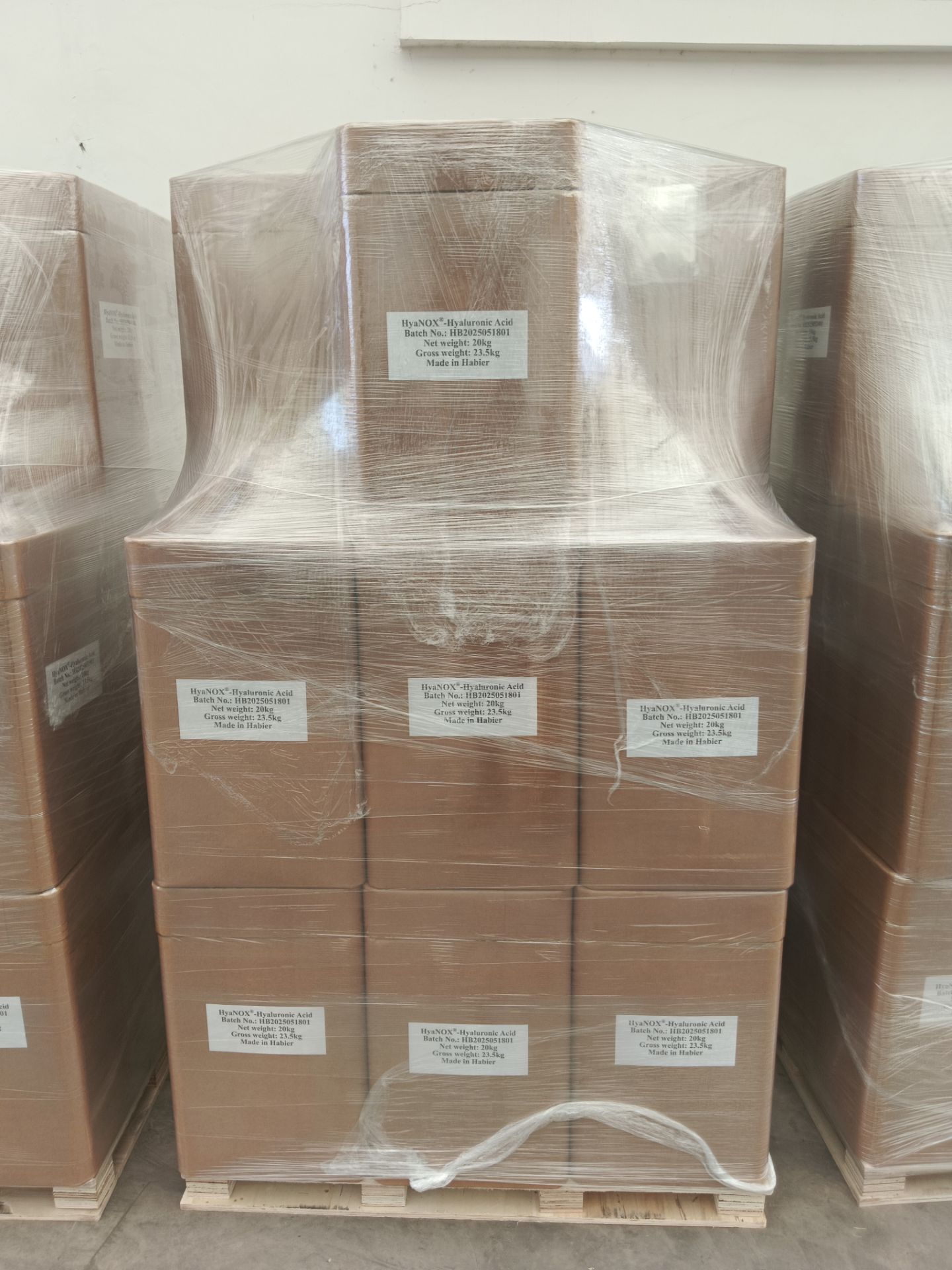
Bulk packaging of sodium hyaluronate destined for a U.S. natural cosmetic importer – a successful case of cross-border supply.
Frequently Asked Questions
What is the difference between sodium hyaluronate and hyaluronic acid?
Sodium hyaluronate is the sodium salt form of hyaluronic acid. It is more stable and has a smaller molecular size, allowing better penetration into the skin. In commercial products, the terms are often used interchangeably, but the salt form is more common in dry powder raw materials.
What certifications should a top sodium hyaluronate supplier have?
At minimum, ISO 9001 and ISO 22000. Depending on target market, Kosher, Halal, COSMOS, and ISO 16128 are also important. For pharma grade, GMP and possibly DMF (Drug Master File) are required.
How can I verify the molecular weight of sodium hyaluronate?
Request the Certificate of Analysis which typically includes molecular weight measured by GPC (Gel Permeation Chromatography). Reputable suppliers share these data for every batch.
What is the typical MOQ for industrial-grade sodium hyaluronate?
Many suppliers offer a MOQ of 1 kg for sample evaluation. For bulk production orders, MOQ is often 25 kg or 100 kg. Shandong Habier accepts 1 kg for trial orders with lead time of 5-8 days.
How do I ensure the raw material meets US FDA import requirements?
Work with a supplier who understands the USDA APHIS regulations for animal-derived products. Request a USDA import permit and ensure the material has veterinary heat treatment certification. The case study above confirms that complete documentation enables smooth customs clearance.
Conclusion
Selecting a top-ranked sodium hyaluronate supplier requires careful evaluation of quality, certifications, production capacity, customization, and export expertise. Shandong Habier Biopharma Co., LTD exemplifies these criteria with its 50,000 m² factory, dual ISO certifications, annual output of 600-700 MT, and proven success in the US market. By following the step-by-step evaluation process outlined in this guide, procurement teams can confidently partner with a manufacturer that delivers consistent, compliant, and cost-effective hyaluronic acid raw materials.
For a detailed overview of product specifications and capabilities, download the company brochure:
Download Habier Brochure (PDF)
Contact Shandong Habier Biopharma for free samples and technical support: jake@habier.com | Tel: +86-186-0537-0487
Have Questions or Need More Details?
Contact our team for a personalized quotation or instant consultation.
Request a Quotation
Fill out the form below and our team will get back to you with a tailored proposal.
WhatsApp Direct Chat
Prefer to chat in real-time? Message us on WhatsApp for instant assistance & quick answers.
- Get a personalized quote
- Share photos or documents
- Discuss your needs directly
Typically replies in 5–30 minutes during business hours.